
Fleet Safety Guide · En Route Technologies
Quick answer: AI dashcams and video telematics pair road-facing and driver-facing cameras with AI that detects distraction, fatigue and tailgating, warns the driver inside the cab and uploads HD evidence to the cloud within minutes. For UAE transport fleets they reduce accident risk, defend against false claims and support compliance. En Route Technologies provides them as part of its fleet platform.
Table of contents
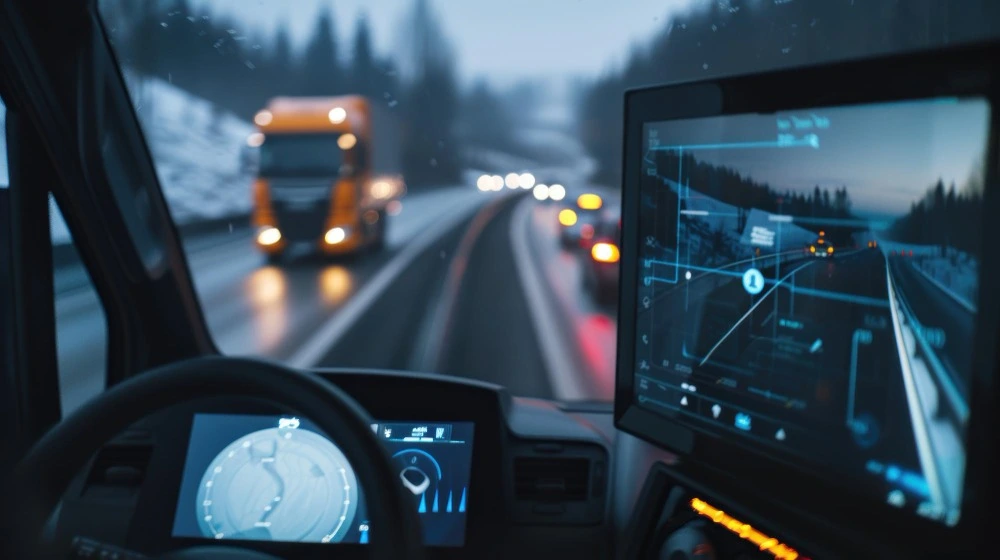
AI dashcams and video telematics combine road-facing and driver-facing cameras with artificial intelligence that detects distraction, fatigue and tailgating, sounds an in-cab alert before an incident happens and uploads HD evidence to the cloud within minutes. For UAE transport fleets, that means fewer accidents, faster claims decisions and a safer, more accountable operation. En Route Technologies offers these capabilities through its AI dashcam solutions.
The UAE’s roads are busy, its highways are long and its freight volumes are rising. This guide explains what AI dashcams do, how to use them, how they respond to drowsy driving, how they help prevent accidents and theft, and what benefits to expect.
6,014
Major road accidents in the UAE in 2025, according to Ministry of Interior figures
44%
Fewer rear-end crashes for large trucks with forward collision warning, according to the Insurance Institute for Highway Safety
Up to 52%
Fewer safety-related events at one carrier after video monitoring and coaching
An AI dashcam is an in-vehicle camera system that uses machine learning to analyze the road and the driver in real time, while video telematics links that footage to vehicle data such as speed, location and G-force. Together they show what happened, why it happened and how to prevent it next time.
| Feature | Regular Dashcam | AI Dashcam | Video Telematics Platform |
|---|---|---|---|
| Records video | Yes, to a memory card | Yes | Yes, with cloud storage |
| Analyzes driver and road | No | Yes, in real time | Yes, with fleet-wide reporting |
| Warns the driver | No | Audible in-cab alerts | Alerts plus manager notifications |
| Links to vehicle data | No | Limited | Speed, location and G-force tagging |
| Access to footage | Retrieve the card | Depends on setup | Cloud upload within minutes |
A traditional dashcam only records after an accident happens. An AI-powered dashcam works to prevent one. En Route combines both layers in its AI dashcam and video telematics offering.
To use AI dashcams effectively in UAE logistics and transport, start with your biggest risks, fit a pilot group of vehicles, set clear alert rules and privacy policies, then build a regular review-and-coaching routine. Cameras alone do not improve safety; the process around them does.
Video is most useful when it sits beside GPS and maintenance data. En Route links dashcam events with its GPS tracking system, fleet management system and reporting and analytics, so a hard-braking clip shows exactly where it happened, at what speed and how the driver scores overall.
An AI dashcam checks and balances driver behavior by detecting risky actions as they happen, recording objective evidence, turning events into driver scores and giving both drivers and managers a fair record to review. Evidence protects safe drivers as much as it flags unsafe ones.
| Behavior or Activity | How It Is Detected | Typical Response |
|---|---|---|
| Smartphone use | Driver-facing camera analyzed by AI | Instant audible alert; clip sent for review |
| Fatigue or drowsiness | Driver-facing camera analyzed by AI | In-cab alert; manager follow-up; rest check |
| Tailgating and road hazards | Road-facing camera with ADAS analysis | Forward warning to the driver |
| Harsh braking and acceleration | Motion and G-force data tagged to video | Event clip and coaching note |
| Speeding | GPS speed data linked to footage | Alert and driver score impact |
| Incidents and collisions | Automatic clip on a harsh event | HD footage uploaded within minutes |
Raw video becomes driver safety scores, which support coaching conversations based on facts rather than opinion. Reviewers can see the full context: the road ahead, the cabin and the telemetry. That context prevents unfair conclusions, such as blaming a driver for braking hard to avoid another vehicle.
Good systems also hold fleet managers accountable. Set review targets, such as checking high-priority clips within a day, and track coaching completion. When managers act consistently, drivers trust the system and respond to it.
Driver-facing cameras record personal data. Under the UAE Personal Data Protection Law (Federal Decree-Law No. 45 of 2021), images and location are personal data and consent is the main legal basis. Tell drivers what is recorded and why, limit who can view footage, set retention periods and keep a written policy. Take legal advice for your situation.
AI dashcams and video telematics are used for accident prevention, incident reconstruction, defending false claims, driver coaching, blind-spot safety, cargo verification and compliance evidence. The same camera serves safety, legal and operational teams.
| Industry | Main Use | Useful Camera Setup |
|---|---|---|
| Logistics and freight | Fatigue, tailgating and cargo evidence | Dual-facing plus cargo camera |
| Last-mile delivery | Harsh braking, reversing and claims defense | Dual-facing plus rear camera |
| Passenger transport and shuttles | Driver conduct and passenger safety | Dual-facing plus cabin view |
| Construction and heavy equipment | Blind spots and site safety | Extended view cameras |
| Oil and gas field services | Safe driving in remote operations | Dual-facing with cloud upload |
| Government and municipal fleets | Accountability and incident evidence | Dual-facing with reporting |
See how En Route supports oil and gas field services, government and municipal fleets and car rental and leasing operations.
When a driver shows signs of sleeping, an AI dashcam detects them through the driver-facing camera, sounds an audible alert in the cab, records and uploads the event and notifies the fleet manager. It cannot steer or stop the vehicle, so it works best alongside rest rules and a follow-up routine.
A U.S. federal study of large-truck crashes (FMCSA and NHTSA) found that about 13% of truck drivers involved in serious crashes were judged to have been fatigued, although estimates vary by method. Fatigue is hard to self-assess, and drowsy drivers often do not notice how impaired they are. In the UAE, long highway legs, summer heat and night-time freight movements raise the importance of managing it.
An AI dashcam is a warning and evidence system. It does not take control of the vehicle, apply the brakes for a sleeping driver or replace rest. Forward-collision and hazard alerts may warn of dangers ahead, but the driver must respond. That is why fatigue management must include scheduling and rest policies, not just cameras.
Keep in mind
Fatigue alerts should lead to rest and support, not punishment. Drivers who fear penalties may hide tiredness; a no-blame approach encourages honest reporting.
Industries prevent future road accidents by turning incident and behavior data into root-cause fixes: they identify patterns, coach drivers, repair vehicle issues, redesign routes and track measurable safety goals. Prevention is a loop, not a one-time purchase.
Every clip contains information about where, when and how risk appears. Reviewing events by route, time of day, vehicle and driver reveals hotspots, such as a junction with repeated hard braking or a shift pattern that produces fatigue alerts. Fix the pattern, not just the person.
Not every accident starts with the driver. Ministry of Interior data on heavy trucks cites tyre problems and poor maintenance among contributing factors. Pair cameras with digital vehicle inspections and a fleet maintenance system so vehicle defects are caught early.
Track events per 1,000 km, coaching completion rates, repeat events by driver and claims costs. A Virginia Tech Transportation Institute study for the U.S. Federal Motor Carrier Safety Administration found video monitoring with coaching cut safety-related events by 37% at one carrier and 52.2% at another over 17 weeks. Your own baseline will show what is achievable.
AI dashcams help avoid road accidents in the UAE by warning drivers about the behaviors that cause most crashes, such as distraction, tailgating and sudden swerving, and by showing blind spots that lead to low-speed collisions.
The UAE recorded 6,014 major road accidents in 2025, and sudden swerving, tailgating and distraction together accounted for more than a third of them, according to Ministry of Interior figures. Heavy trucks were involved in 325 accidents in 2025 and 1,136 between 2022 and 2025. These are the behaviors AI dashcams are designed to detect.
Most crashes follow a short chain: distraction, late reaction, impact. An audible alert for phone use or fatigue interrupts that chain early. En Route’s AI dashcam solutions also alert drivers to road hazards in real time, giving drivers seconds to react.
A study by the Insurance Institute for Highway Safety of large trucks found that forward collision warning reduced rear-end crashes by 44%, and automatic emergency braking by 41%. Even crashes that were not prevented were less severe because impact speeds fell. The study examined collision-warning technology in general, not any single product, but it shows why early warnings matter.
Heavy vehicles and equipment have large blind spots. Extended view cameras show real-time footage from rear and side cameras on an in-cab monitor, helping drivers reverse and move safely through tight industrial spaces.
UAE traffic authorities fine hand-held phone use at AED 800 with four black points, and tailgating at AED 400 with four black points, with licence suspension when a driver reaches 24 black points within 12 months. Fines change, so confirm current amounts with the authorities. Fewer violations protect both your drivers and your operating continuity.
The main benefits of AI dashcams for fleet safety in the UAE are fewer accidents, lower repair and claims costs, faster incident resolution, better driver behavior and stronger compliance records.
| Benefit | How It Happens | What to Track |
|---|---|---|
| Fewer accidents | In-cab alerts correct risky behavior early | Events per 1,000 km; collision rate |
| Lower repair and downtime costs | Fewer serious incidents | Repair spend; vehicle downtime days |
| Defense against false claims | HD footage of road and cabin | Claims rejected or reduced |
| Better insurance conversations | Video evidence shows active safety management | Premium trends at renewal |
| Better coaching | Clips and scores make feedback specific | Coaching completion; repeat events |
| Stronger accountability | Objective record for drivers and managers | Review time; dispute resolution time |
Real-time alerts and coaching reduce risky behavior. A culture of visibility makes safety guidelines easier to follow on every route.
Video evidence can exonerate drivers in false or staged accident claims, reducing unjust payouts. Fewer serious incidents mean lower repair, downtime, injury-claim and lost-productivity costs. En Route notes that fleets can use their AI dashcam deployment and safety data to negotiate lower insurance premiums, though results depend on the insurer and your record.
HD clips uploaded to the cloud within minutes mean managers do not wait for an SD card to be retrieved. Combined with the driver app and reporting and analytics, safety data feeds into daily decisions.
AI dashcams help prevent theft by recording who is in the cab and what happens to the cargo, giving timestamped evidence that deters misuse and supports investigations, especially when combined with GPS trscking system alerts. Cameras work best as one layer of a wider security setup.
Fleets face unauthorized vehicle use, cargo pilferage, fuel loss and false damage claims. These often happen at night, at unattended stops or during handovers, when supervision is weakest.
Preserve original footage, record who accessed it and share it with the police when needed. Limit viewing to authorized staff and keep to your retention policy so evidence remains reliable and privacy is respected.
The future of fleet safety in the UAE is proactive. AI dashcams and video telematics warn drivers before incidents, capture evidence when they happen and turn footage into coaching and better decisions. They help with distraction, fatigue, tailgating, blind spots, false claims and theft, but they work best with coaching, rest rules, maintenance and clear privacy policies.
Start with a pilot, set measurable goals and review results weekly. En Route Technologies brings AI dashcam solutions, GPS tracking, maintenance and reporting together on one platform. Explore the fleet management system or contact the team to discuss your fleet.
A regular dashcam passively records video onto a memory card. An AI dashcam analyzes the road and the driver in real time using machine learning, detects behaviors such as phone use, fatigue and tailgating, and triggers an immediate audible alert in the cab.
Yes. The driver-facing camera looks for signs of fatigue, and the system sounds an audible alert in the cab, records the event and uploads the clip so a manager can follow up. It does not take control of the vehicle, so drivers must stop and rest.
No. An AI dashcam alerts the driver and records evidence. It does not brake, steer or immobilize the vehicle. Treat it as a warning and coaching tool alongside rest rules and good vehicle maintenance.
The system is cloud-connected. When a harsh event such as a crash or hard braking is detected, the AI clips the footage and uploads it to your dashboard within minutes, tagged with speed, location and G-force.
HD footage from the road and the cabin can help exonerate drivers in false or staged claims. Many fleets also use their video and safety data when negotiating insurance terms, although outcomes depend on the insurer and your record.
They help as one layer. Driver-facing and cargo cameras record who was in the vehicle and what happened to the load, which deters misuse and supports investigations. Combine them with GPS geofence alerts and fuel monitoring for stronger protection.
Images and location data are personal data under the UAE Personal Data Protection Law (Federal Decree-Law No. 45 of 2021), and consent is its main legal basis. Tell drivers what is recorded and why, limit access to footage and keep a written policy. This is general information, not legal advice.
Review your incident history, choose a pilot group of vehicles, install forward and driver-facing cameras (plus extended view or cargo cameras where needed), brief your drivers and review events weekly. Book a demo with En Route to plan the rollout.
Book a demo to see AI dashcams, live GPS tracking and fleet safety reporting working together for your vehicles.