
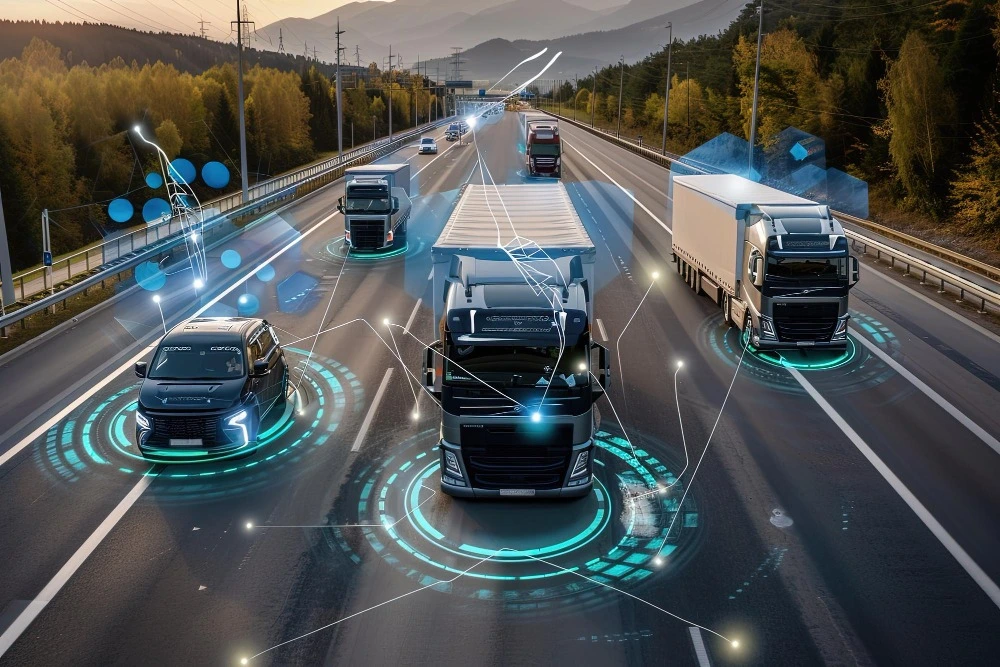
Fleet operations are becoming more connected, data-driven, and complex. As businesses manage more vehicles, drivers, routes, and assets, basic location tracking alone may not provide enough operational visibility. This is where telematics technology can bring multiple data sources together and turn vehicle information into useful insights.
Fleet Telematics Technology Providers help organizations connect vehicles with software, sensors, GPS, communications networks, and analytics tools. These solutions can support real-time monitoring, vehicle performance analysis, driver safety, route planning, fuel efficiency, and operational decision-making.
Choosing a provider requires more than comparing features. Businesses should consider integration, scalability, data quality, reporting, hardware reliability, security, and ongoing support.
What Is Fleet Telematics Technology?
Depending on the solution, telematics can capture location, mileage, speed, engine information, driving events, fuel-related data, and other operational signals.
What Do Fleet Telematics Technology Providers Offer?
A telematics provider typically combines hardware, connectivity, cloud software, dashboards, alerts, analytics, and support. Modern providers may also offer mobile applications, APIs, and integrations with existing business systems.
These capabilities help organizations build a connected approach to fleet operations, making it easier to understand Fleet Manager Responsibilities instead of relying on disconnected sources of information.
Key Features to Look For
Real-Time Vehicle Monitoring provides visibility into locations, movements, routes, and operational status.
Fleet Management System Integration becomes more valuable when vehicle data connects with wider workflows and management processes.
Performance Analytics helps managers identify trends across vehicles and operations and compare utilization, productivity, and performance.
Connected Telematics Capabilities can connect vehicle hardware, data transmission, dashboards, alerts, and analytics in one environment.
Scalable Architecture is important for businesses adding vehicles, assets, locations, or new operational workflows.
Benefits of Fleet Telematics Technology
Improved Fleet Visibility gives managers a clearer view of fleet activity and reduces reliance on manual updates.
Better Operational Efficiency helps identify inefficient routes, unnecessary mileage, excessive idling, and underused vehicles.
Stronger Driver Safety can be supported through monitoring of speeding, harsh braking, rapid acceleration, and other driving patterns.
Better Vehicle Performance comes from reviewing connected data and identifying unusual operating patterns.
More Informed Business Decisions are possible when telematics data is connected to measurable Fleet Management KPIs.
Operational Cost Control improves when businesses identify areas such as inefficient routing, excessive idling, poor utilization, and avoidable vehicle activity. Actual savings depend on how managers act on the data.
How Telematics Supports Fleet Optimization
Telematics provides the data needed to understand how vehicles are being used. However, data alone does not improve performance. Managers need processes that turn information into action.
Route data can reveal inefficient travel patterns, while utilization data can show whether vehicles are being fully used. Managers can then adjust routes, assignments, schedules, or vehicle allocation.
Businesses can combine telematics insights with structured Fleet Optimization Strategies to improve utilization, productivity, routing, and overall fleet efficiency.
How to Evaluate Fleet Telematics Technology Providers
Define Your Fleet Requirements. Start by identifying the problems the business needs to solve, such as visibility, safety, fuel efficiency, utilization, routing, compliance, or reporting.
Evaluate Hardware Compatibility. Check whether devices are compatible with the vehicles and operating conditions in your fleet.
Review Software and Reporting. Look for clear dashboards, customizable reports, alerts, trend analysis, historical data, and useful analytics.
Check Integration Capabilities. Ask whether the platform supports APIs and integrations with fleet, ERP, maintenance, dispatch, or other business systems.
Consider Security and Data Protection. Review access controls, authentication, data protection practices, and account permissions.
Assess Customer Support. Training, technical support, troubleshooting, software updates, and account assistance can affect long-term value.
Fleet Telematics and Fleet Management Software
Telematics and fleet management are closely connected, but they are not exactly the same. Telematics focuses on collecting and communicating vehicle and operational data, while fleet management software uses that information within broader management workflows.
A telematics system may provide vehicle location and driving data, while a broader platform can combine those signals with scheduling, performance, reporting, and other operational information. Reviewing the Benefits of Fleet Management Software can help businesses understand how these broader workflows create operational value.
Why Data Quality Matters
The value of telematics depends heavily on data quality and consistency. Missing signals, inaccurate vehicle information, poor installation, or disconnected systems can reduce the usefulness of reports.
Businesses should regularly review device health, reporting accuracy, and system connectivity to maintain a reliable data foundation.
Future Trends in Fleet Telematics
Artificial intelligence, IoT sensors, predictive analytics, connected vehicles, and automated alerts are shaping the future of fleet telematics. These technologies can help organizations move from reactive monitoring toward more predictive operations.
Future platforms are likely to provide smarter risk detection, predictive maintenance insights, dynamic route optimization, automated recommendations, and deeper performance analysis.
Why En Route Technologies?
En Route Technologies provides Fleet Telematics Solutions designed to help businesses improve fleet visibility, operational control, and data-driven decision-making. Its technology can support organizations that want to connect vehicle data with broader fleet management processes.
Businesses can use integrated fleet technology to monitor operations, analyze performance, improve visibility, and build more efficient workflows.
Conclusion
Choosing among Fleet Telematics Technology Providers requires a clear understanding of current and future fleet needs. The right provider should offer reliable hardware, connected software, useful analytics, scalable architecture, integrations, security, and responsive support.
More importantly, telematics should help businesses turn vehicle data into practical decisions. When used effectively, it can improve visibility, support safer driving, optimize operations, and provide measurable insights into fleet performance.
FAQ's
They offer hardware, connectivity, software, dashboards, alerts, and analytics that collect and manage vehicle and fleet data.
Depending on the system, it can monitor vehicle location, mileage, speed, driving events, routes, vehicle information, and other operational data.
It provides data that can help managers identify inefficient routes, excessive idling, unnecessary mileage, poor utilization, and other operational issues.
No. A GPS Tracking System mainly provides location and movement information, while telematics can combine GPS with vehicle, driver, sensor, and operational data.
Evaluate hardware, software, scalability, integrations, reporting, security, support, data quality, and compatibility with fleet requirements.
Yes. Telematics can supply Fleet Performance Management Software with data for performance measurement, driver monitoring, utilization analysis, route optimization, and other fleet performance activities.