
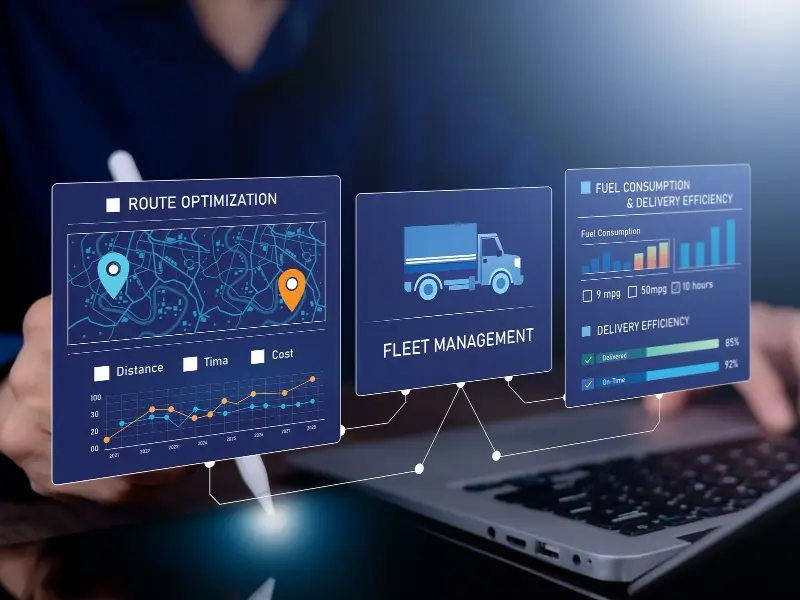
Fleet Optimization Strategies: Improve Efficiency, Reduce Costs, and Boost Productivity
Knowing where your trucks are isn’t enough anymore. Not if you’re trying to actually run a tight operation. Fuel keeps creeping up, vehicles sit around doing nothing half the day, and somehow the maintenance bill still catches everyone off guard. Sound familiar? This is the gap that good Fleet Optimization Strategies are meant to close.
So what does that look like in practice? A mix of things, really the right tech, a maintenance plan you actually stick to, smarter routing, and someone keeping an eye on how drivers behave on the road. A decent Fleet Management System ties all of that together so managers aren’t just guessing based on gut feel.
GPS tracking, telematics, fuel monitoring, predictive maintenance none of these are new ideas. But used together, they let you catch a small problem while it’s still cheap to fix, instead of after it’s turned into a five-figure repair. And there’s a knock-on effect too: happier customers, fewer headaches, and a fleet that can actually grow with the business instead of holding it back.
What Does Fleet Optimization Actually Mean?
Here’s the short version: it’s the ongoing work of getting more out of your vehicles without spending more to do it. That means digging into your fleet data and adjusting routes, reassigning vehicles, tightening up maintenance schedules, watching fuel use, and generally paying attention to how your assets are actually performing not how you assume they’re performing.
Notice what’s missing from that list? Buying more trucks. The point isn’t to grow the fleet, it’s to squeeze more value out of what you’ve already got. Sometimes that’s as simple as cutting a few pointless trips. Other times it means retiring a manual process nobody’s questioned in years.
Why Fleet Optimization Strategies Matter
Costs don’t spike overnight they creep. A vehicle sits idle a little too long, a route gets planned without checking traffic, a decision gets made on a hunch instead of data. None of it looks like much in isolation. Add it up over a quarter and it’s a different story.
This is exactly why visibility matters so much. Fleet Reporting and Analytics gives managers a way to actually see the trends instead of sensing that “something’s off” without being able to point to what.
What does putting real fleet optimization strategies into practice actually get you? A few things, typically:
- Lower fuel and maintenance costs
- Vehicles that are actually being used, not just owned
- Fewer surprise breakdowns
- Drivers who take fewer risks
- Jobs that get done faster
- Routes that make sense
- Assets going where they’re needed, not where they happen to be
- Customers who notice the difference
- A fleet that performs better across the board
1. Track Vehicles in Real Time
This one’s the foundation, honestly. Everything else is easier once you actually know where your vehicles are. A GPS Tracking System gives you that live location, movement history, and a heads-up if a vehicle’s being used somewhere it shouldn’t be.
Pair it with a proper Fleet Tracking System and dispatching gets a lot less chaotic. You’re not calling around trying to figure out who’s closest to a job. You just… know.
2. Get More Out of Every Vehicle
A truck parked for three days a week isn’t “available,” it’s a cost with nothing coming back the other way. Meanwhile the truck getting run into the ground on every job is racking up repair bills you probably haven’t connected to the workload yet.
Look at hours, mileage, idle time, who’s assigned what. Fleet Performance Management Software makes the underused vehicles obvious pretty fast no more guessing which ones are pulling their weight.
Get utilization right and you might not need to buy that next vehicle at all. Workloads even out, and asset decisions stop being reactive.
3. Plan Smarter Routes and Dispatching
A bad route costs you twice once in fuel, once in whoever’s waiting on the delivery. Route optimization looks at destinations, traffic, job priority, and which vehicles are free, then picks something better than “the way we’ve always driven it.”
Combine that with real-time tracking and dispatchers can actually react send the nearest free vehicle instead of whoever happens to answer the radio first. Less driving around for nothing, more jobs finished by 5.
4. Cut Down on Fuel Waste
Fuel’s usually the single biggest line item, so it’s worth the attention. Less idling, tighter routes, and driving habits that don’t burn extra gas for no reason small things, but they add up fast across a whole fleet.
A Fuel Monitoring System will flag the weird spikes you’d otherwise miss. Cross-reference that against driver and route data and the source of the waste usually becomes obvious.
Eco Driving habits help too smoother acceleration, less hard braking, cutting idle time. Nothing dramatic, but it shows up in the fuel bill.
5. Improve Driver Performance
Behind-the-wheel habits touch almost everything safety, fuel, how fast vehicles wear out, the works. Speeding, harsh braking, flooring it off the line, sitting there idling for no reason all of it costs you somewhere down the line.
A Driver Management System flags patterns worth coaching on before they become a real problem. Add a mobile Driver App and drivers are plugged directly into the fleet’s workflow, not working off a printed schedule from this morning.
6. Stay Ahead With Preventive Maintenance
A breakdown always seems to happen at the worst possible time. Preventive maintenance is really just about catching the small stuff before it becomes the expensive stuff.
A Fleet Maintenance Management System handles the scheduling side inspections, service intervals, repair history, reminders so nothing gets forgotten because someone was busy.
It also makes patterns easier to spot. If one vehicle keeps coming back for the same issue, that’s a repair-vs-replace conversation worth having sooner rather than later.
7. Track the Right KPIs
Hard to improve something you’re not actually measuring. Fuel consumption, utilization, maintenance spend, downtime, on-time rates, safety incidents, cost per mile these are the numbers that actually tell you something.
Check them regularly, not just when something goes wrong. That’s how you catch a slow decline before it becomes a real problem, and how you give your team something concrete to aim for.
8. Rethink How You Allocate Assets
Vehicles aren’t the whole story. If you’re in construction, logistics, or field service, there’s a good chance trailers and machinery are sitting around just as unused as any truck could be.
An Asset Management System tells you where everything actually is, how often it’s used, and what’s free for the next job instead of relying on someone’s memory.
Get this right and equipment stops sitting idle in a yard somewhere while a job site waits on a rental.
9. Bring Telematics and IoT Into the Picture
Connected data fills in the gaps that basic tracking leaves behind. Fleet Telematics Solutions combine location, vehicle condition, driver behavior, and operational data into one picture instead of five disconnected ones.
A Telematics & IoT Platform takes it further, pulling in data from sensors across the fleet. This is the point where a fleet stops just being “tracked” and starts being genuinely optimized.
10. Make Smarter Lifecycle Decisions
Every vehicle has a point where it stops making financial sense. Repair, replace, or retire and holding onto the wrong choice too long quietly drags down productivity while the maintenance bills keep climbing.
Fleet Lifecycle Management Software tracks assets across their full lifespan, so that decision is based on actual numbers instead of a hunch.
Common Mistakes That Undermine Fleet Optimization
Collecting data and doing nothing with it. A dashboard full of numbers doesn’t help anyone if it’s not actually driving decisions.
Ignoring driver behavior. It’s tempting to focus on the vehicles and forget the person driving them, but habits behind the wheel touch fuel, safety, and maintenance all at once.
Sticking with manual maintenance tracking. Spreadsheets and sticky notes work fine right up until a service interval gets missed and a vehicle breaks down mid-job.
Obsessing over fuel and nothing else. Fuel matters, sure, but it’s one piece. Downtime, safety, and utilization deserve just as much attention.
Never benchmarking anything. Without a “before,” it’s genuinely hard to prove there’s an “after.”
Best Practices for Putting Fleet Optimization Strategies to Work
- Set targets you can actually measure
- Check fuel, utilization, maintenance, and safety KPIs regularly not occasionally
- Use real-time GPS and telematics instead of relying on memory
- Handle maintenance before it becomes an emergency
- Coach drivers using real data, not gut feeling
- Revisit routes now and then what worked a year ago might not anymore
- Catch underused vehicles and assets early
- Automate reporting so it actually happens
- Treat performance review as ongoing, not an annual event
How En Route Technologies Supports Fleet Optimization
En Route Technologies builds connected fleet solutions that pull vehicles, drivers, assets, and performance data into one place, so managers aren’t piecing it together from five different tools.
Fleet Reporting and Analytics shows where the trends are heading and where things need attention. Fleet Performance Management Software backs up the day-to-day calls that keep operations running smoothly.
Put GPS tracking, telematics, fuel monitoring, driver management, and maintenance together in one system, and you get a fleet that’s actually data-driven not just one that happens to collect data.
What’s Next for Fleet Optimization
Where’s this all heading? AI-driven analytics, predictive maintenance, more connected vehicles, and reporting that mostly runs itself. As more of the fleet starts generating real-time data, catching a problem early gets a lot more realistic than it used to be.
AI can dig through both historical and live data to find patterns in fuel use, maintenance needs, routing, and driver behavior that would take a person weeks to spot manually. That shifts managers from reacting after something breaks to catching it before it does.
The businesses that start building strong Fleet Optimization Strategies now will be the ones ready to actually use these tools once they mature not scrambling to catch up.
FAQ's
Fleet Optimization Strategies are methods businesses use to improve vehicle utilization, reduce operating costs, optimize routes, improve maintenance, increase safety, and boost overall fleet productivity.
Fleet optimization can reduce costs by lowering fuel consumption, minimizing downtime, improving maintenance planning, reducing unnecessary mileage, and making better use of existing vehicles and assets.
GPS tracking provides real-time visibility into vehicle locations, routes, movement, and utilization, helping managers improve dispatching and resource allocation.
Vehicle utilization measures how effectively vehicles are being used based on factors such as operating hours, mileage, availability, and workload.
Businesses can improve fleet efficiency through route optimization, preventive maintenance, fuel monitoring, driver training, real-time tracking, KPI analysis, and better asset allocation.
Yes. Monitoring speeding, harsh braking, acceleration, and other driving behaviors can help managers provide targeted coaching and improve safety.