
Benefits of Fleet Management Software for Smarter Fleet Operations
Running a commercial fleet has gotten harder, not easier. Fuel costs won’t sit still, drivers need to stay safe, maintenance bills keep showing up at the worst times, and customers expect service that’s basically instant. Try to manage all of that on spreadsheets once a fleet grows past a handful of vehicles, and things start slipping decisions get delayed, small problems turn into expensive ones, and nobody quite has the full picture.
Ask any fleet manager how their week went, and fuel prices probably come up before you’ve even finished the question. Then it’s a driver who took a corner too fast, a truck that decided to break down on a Friday, a customer who wants to know why their delivery is two hours late. None of that is new. What’s changed is how much of it a spreadsheet can actually handle once a fleet grows past ten or fifteen vehicles which, honestly, isn’t much.
What Fleet Management Software Actually Is
Strip away the buzzwords and it’s a centralized platform for tracking, managing, and optimizing vehicles over their working life. GPS tracking, telematics, maintenance, driver monitoring, fuel data, reporting one system instead of five half-used ones.
Practically, that means a manager can:
- Track where vehicles are, live
- Watch driver behavior instead of hearing about it after the fact
- Have maintenance scheduled automatically instead of tracked on a whiteboard
- Route vehicles more efficiently
- Cut fuel waste
- Keep inspection and compliance records digital
- Pull performance data from a dashboard instead of building a report from scratch
None of these individually sounds revolutionary. Put them together, though, and the fleet just runs differently: fewer fires to put out, more time spent planning instead of reacting.
The Pieces That Make Up a Modern Platform
A decent fleet platform bundles GPS vehicle tracking, live monitoring, route optimization, driver behavior tracking, fuel analysis, preventive maintenance scheduling, digital inspections, geofencing, asset tracking, reporting, mobile driver apps, and AI-powered alerts. It’s a long list, and most businesses only lean heavily on a handful of them at first usually tracking and maintenance before growing into the rest.
Who’s Actually Using This Stuff
It’s stopped being a trucking-company-only tool. Logistics, transportation, government agencies, municipal services, construction, oil and gas, utilities, public transit, car rental, field service, emergency response, distribution the list keeps growing every year. Different industries, same underlying need: know where your assets are, keep them running, and don’t find out about a problem after it’s already cost you money.
How It Actually Works, Mechanically
Data collected from each vehicle location, engine health, fuel usage, driver behavior, trip history, diagnostics, maintenance status, route performance flows to a cloud dashboard that a manager can check from a laptop or phone. That last part matters more than it sounds; a lot of fleet decisions used to wait until someone got back to the office.
GPS tracking gives you live locations and route histories, which sharpens dispatch and makes unauthorized vehicle use a lot harder to pull off unnoticed. Businesses wanting more than the basics can look at a GPS Fleet Tracker for tighter route accuracy and delivery precision.
Telematics pulls data straight from a vehicle’s own systems engine diagnostics, speed, fuel burn, idle time, battery health, mileage, fault codes and feeds it into the platform automatically. Add a Telematics & IoT Platform on top and you’re looking at predictive maintenance territory, catching a failing part before it actually fails.
AI does the part humans are slow at sifting through months of data to flag upcoming maintenance, risky driving patterns, better routes, idling that’s quietly burning fuel, and utilization gaps nobody noticed. The shift here is from reacting to problems to catching them a week or two before they’d have shown up on their own.
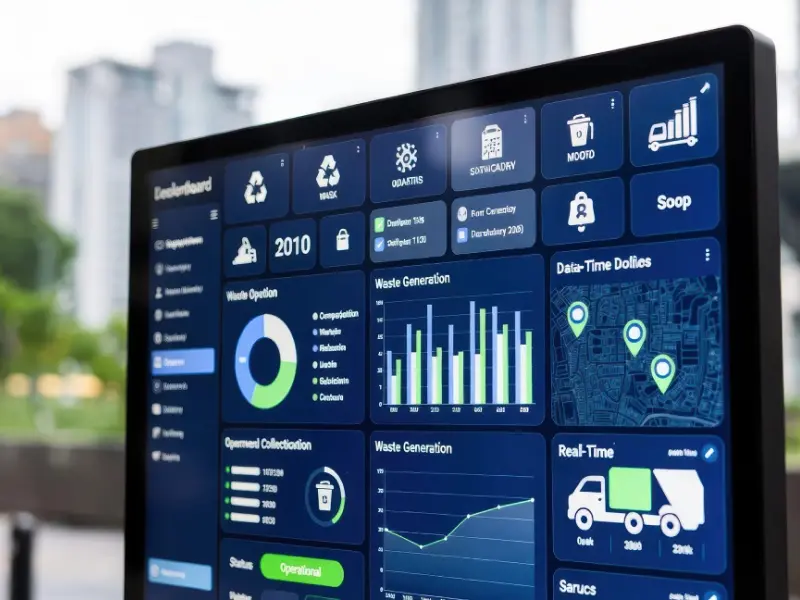
The dashboard itself is usually a live map, vehicle status, driver scores, maintenance alerts, fuel reports, compliance status, and KPIs, all in one place which sounds obvious until you remember most fleets used to piece this together from five different tools.
Mobile apps round it out. A driver-facing app typically handles job assignments, routes, inspections, photo uploads, incident reports, digital forms, and messages to dispatch which quietly kills a lot of the paperwork that used to slow everyone down.
What Actually Changes Once You’re Using It
Here’s where it gets concrete not features, but what’s genuinely different day to day.
You Can See the Whole Fleet at Once
This is usually the first thing managers notice. Vehicle locations, what drivers are doing right now, trip progress, availability, route status visible without a single phone call.
A Fleet Tracking System makes dispatch faster because there’s no guessing involved. Reroute a vehicle mid-shift, respond to a customer request immediately, keep the whole operation coordinated instead of catching up after the fact. It also quietly discourages the kind of unauthorized vehicle use that’s nearly impossible to prove without location data.
Dispatch Stops Being Guesswork
One dashboard, every vehicle, live. Arrival times, route deviations, which vehicle’s been sitting idle for forty minutes a manager can see all of it and adjust on the fly rather than finding out tomorrow. Add a Vehicle Tracking System and the accuracy improves enough that customer communication actually gets easier, not just faster.
Fuel Costs Come Down — Genuinely
Fuel’s usually the single biggest line item on a fleet budget, so this is where the software earns its keep fastest. Fuel reports flag the stuff that’s easy to miss otherwise: excessive idling, harsh acceleration, speeding patterns, routes that stopped making sense two reroutes ago.
A Fuel Monitoring System tracks consumption in real time and can catch fuel theft, which is otherwise nearly invisible without hard data behind it. Pair that with a GPS Tracking System and inefficient routes stop being a hunch and start being obvious on a map.
Drivers Actually Drive Safer
Accidents and risky habits cost more than the obvious repair bill insurance, morale, and reputation all take a hit too. Real-time behavior monitoring catches speeding, harsh braking, rapid acceleration, sharp cornering, and unauthorized use the moment it happens instead of in a report three weeks later that nobody reads carefully.
ADAS & AI dashcams add another layer, watching both the road and the driver, which helps prevent collisions and gives you actual video evidence if something does go wrong. A driver app keeps communication open too routes, incident reports, inspections, all without a clipboard that inevitably ends up soaked in coffee.
Breakdowns Stop Being a Surprise
An unexpected breakdown never costs just the repair. It costs the delivery that didn’t happen and the customer who noticed. Automated maintenance planning is one of the more immediately felt benefits here.
A Fleet Maintenance System schedules servicing based on mileage, engine hours, or calendar dates, so nobody’s relying on memory. Preventive Maintenance Software layers ongoing health monitoring on top, and for businesses running their own shop, Workshop Management System tools organize work orders and technician assignments instead of leaving it to a whiteboard. Vehicle Maintenance Management Software keeps every repair and service record searchable in one place, and Digital Vehicle Inspection swaps out paper checklists for something that’s actually reliable.
Less downtime, longer vehicle life, lower repair costs, more availability when you actually need a truck that’s the practical result.
More Work Gets Done With the Same Fleet
Higher productivity from the same vehicles is often the actual business case behind all of this. Dispatchers using a Fleet Tracking System can see who’s free and assign the closest driver, adjusting around live traffic rather than yesterday’s plan.
Vehicle Tracking Software adds full visibility, cutting delays and lifting service quality. Detailed Vehicle Service History records also cut down admin work nobody’s digging through a filing cabinet to check when a truck was last serviced. Work Order Management simplifies task assignment for field teams specifically, and Reporting Analytics rounds things out with insight into utilization, driver performance, fuel efficiency, and whatever KPIs actually matter to your operation.
The Overall Cost Picture Improves
Fuel, maintenance, insurance, labor, admin fleet costs come from everywhere, and without one system pulling it together, they’re genuinely hard to control. This is arguably why most businesses invest in fleet software in the first place, even before the safety or productivity angles come up.
Automating routine tasks and cutting paperwork frees managers to actually go looking for inefficiencies instead of just managing the chaos. Scheduled servicing avoids costly breakdowns, route optimization trims fuel waste and vehicle wear, and automated reporting means less time spent compiling records and more spent on actual planning. Lower maintenance spend, less fuel burned, fewer admin hours, better utilization, fewer insurance claims it tends to show up across the board rather than in one dramatic line item.
Customers Notice the Difference
Customers expect accurate windows and fast answers, and fleet software makes both a lot more achievable. GPS Tracking Software gives dispatchers real locations, which means ETAs that hold up and if something changes, routes get adjusted immediately instead of leaving a customer wondering.
Compliance Stops Being a Fire Drill
Tracking inspections, maintenance records, and driver documentation manually is exactly the kind of thing that leads to missed deadlines nobody meant to miss. Digitizing it removes most of that risk.
Vehicle Inspection Software handles routine checks and keeps records that are actually searchable come audit time. Digital Vehicle Inspection Software lets drivers and technicians complete checks from a phone instead of a clipboard, and ongoing inspection processes keep vehicles roadworthy without anyone having to remember every deadline by hand.
Assets Get Used, Not Just Owned
Vehicles and equipment represent serious capital sitting in a yard somewhere, so using them well actually matters. An Asset Management System tracks usage, availability, and performance in real time, and underutilized equipment stops hiding it just shows up on the dashboard.
Asset Management Software adds full visibility for businesses managing equipment beyond vehicles, and an Asset Monitoring System tracks health so alerts show up before something actually fails. Higher utilization, fewer idle assets, less capital tied up in things that aren’t earning their keep that’s the practical outcome.
Decisions Start Coming From Data, Not Gut Feel
Data’s arguably the most valuable byproduct of running a fleet, assuming someone’s actually looking at it. Reporting Analytics tracks KPIs and trends over time instead of relying on whoever’s loudest in the weekly meeting. AI-powered dashboards layer fuel usage, maintenance costs, driver behavior, and route efficiency on top, which is what supports the kind of slow, steady improvement that adds up over a year rather than a dramatic overnight fix.
Where This Shows Up Most
A handful of industries lean on fleet software especially hard:
- Government & municipal fleets — public vehicles, heavy compliance requirements
- Construction & heavy equipment — machinery, utilization, and maintenance across scattered sites
- Oil and gas field services — remote operations where visibility isn’t optional
- Public transport & shuttle operations — routes, passenger safety, schedules that actually hold
- Car rental and leasing — availability, maintenance, and usage tracking at volume
Different problems, same underlying fix: visibility, automation, and decisions made with actual information.
What’s Under the Hood
If you’re evaluating platforms, the feature list to check for usually includes a GPS Tracking System, Fleet Tracking System, Vehicle Tracking Software, Fuel Monitoring System, Fleet Maintenance System, Vehicle Inspection Software, Digital Vehicle Inspection, Telematics & IoT Platform, ADAS & AI dashcams, a driver app, geofencing, route optimization, AI-powered alerts, custom dashboards, and automated reporting. Not every business needs all of it on day one but it’s worth knowing what’s available before you’re locked into a platform that can’t grow with you.
Why This Has Become a Real Investment, Not a Nice-to-Have
Cloud platforms, AI-driven analytics, predictive maintenance, and real-time tracking have quietly shifted from “nice extras” to table stakes. Businesses that respond to problems fast, rather than catching up after the fact, tend to just run leaner and that gap is only getting wider as more competitors adopt the same tools.
Picking the Right Platform
Worth checking before signing anything: does it scale as the fleet grows, is the interface something people will actually use, is it cloud-accessible, does GPS and telematics integration actually work well, is maintenance handling automated rather than bolted on, is the reporting genuinely useful, is there a real mobile app, is security taken seriously, and can support actually be reached when something breaks. Get these right upfront and the return on the whole investment mostly takes care of itself.
The Bottom Line
The Benefits of Fleet Management Software go well past knowing where a truck is. A solid platform cuts fuel waste, keeps drivers safer, keeps maintenance ahead of problems instead of behind them, sharpens customer service, and replaces gut-feel decisions with ones backed by actual data.
Ready to see what this actually looks like for your fleet? En Route Technologies’ fleet management solutions can help you cut costs, run leaner, and get real visibility across every vehicle you operate.
FAQ's
Better vehicle visibility, lower fuel costs, smarter maintenance, safer drivers, higher productivity, and lower overall operating expenses.
Through route optimization, preventive maintenance, fuel monitoring, automated reporting, and better vehicle utilization working together.
Yes, it monitors behavior, sends real-time alerts, supports AI dashcams, and gives managers the data to coach drivers toward safer habits.
Generally, yes. Smaller businesses often see efficiency and cost gains just as fast, and scalable platforms grow with the fleet instead of needing to be replaced.
Almost always live monitoring, route optimization, geofencing, and trip history are standard in most modern platforms.
By automating preventive schedules, tracking full service history, monitoring vehicle health, and sending reminders early enough to avoid unexpected breakdowns.