
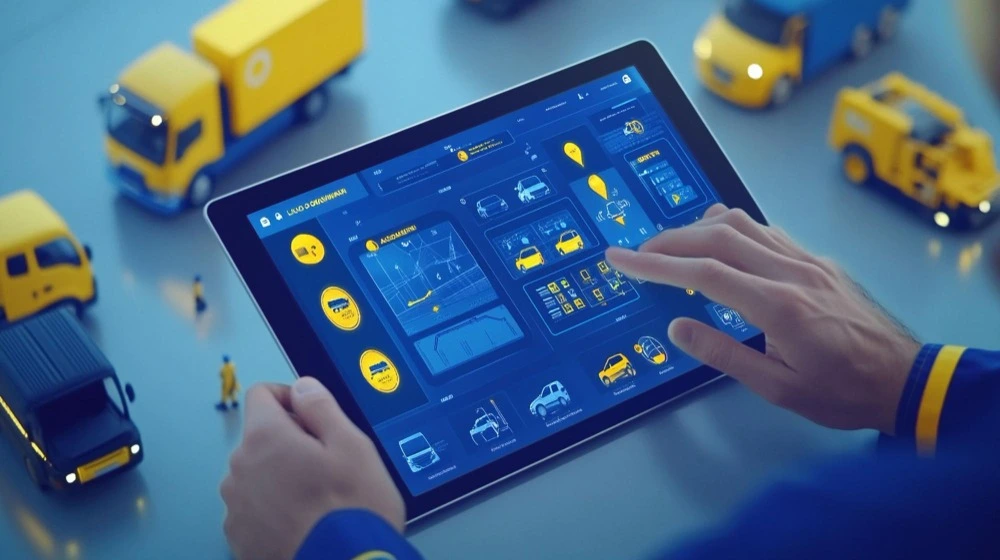
Most Important Fleet Management KPIs to Measure Fleet Performance
Managing a commercial fleet involves much more than tracking vehicle locations. Fleet managers must monitor fuel costs, vehicle maintenance, driver performance, safety, and operational efficiency to ensure smooth day-to-day operations. Without measurable data, identifying performance issues and making informed business decisions becomes difficult.
This is where the Most Important Fleet Management KPIs play a crucial role. Key Performance Indicators (KPIs) provide measurable insights into fleet operations, helping businesses evaluate performance, reduce operating costs, improve vehicle utilization, and increase productivity. By monitoring the right Fleet Management KPIs, organizations can identify inefficiencies, improve fleet safety, and maximize the return on their fleet investments.
Modern businesses rely on a Fleet Management System to collect real-time operational data from connected vehicles. Combined with advanced Fleet Analytics, these insights enable organizations to make proactive decisions rather than reacting to operational issues after they occur. Whether managing logistics fleets, construction vehicles, government fleets, or field service operations, tracking the right KPIs is essential for achieving long-term operational success.
In this guide, we’ll explore the most important fleet management KPIs, explain why they matter, and show how they help businesses improve fleet efficiency and overall performance.
What Are Fleet Management KPIs?
Fleet Management KPIs are measurable performance indicators that help organizations evaluate the effectiveness of their fleet operations. These metrics provide valuable information about vehicle utilization, fuel efficiency, maintenance performance, driver behavior, operational costs, and overall fleet productivity.
Rather than relying on assumptions, businesses use KPIs to monitor real-time fleet performance and identify areas that require improvement. A modern Fleet Management System automatically collects operational data and presents it through intuitive dashboards, making it easier for fleet managers to make informed decisions.
By using accurate Fleet Reporting and Analytics, businesses can improve operational visibility, reduce unnecessary expenses, enhance customer service, and maintain higher levels of fleet efficiency.
Why Fleet Management KPIs Matter
Monitoring fleet performance without KPIs is like driving without a dashboard. Businesses may know where their vehicles are, but they lack the insights needed to improve efficiency and profitability.
Tracking theMost Important Fleet Management KPIs enables organizations to:
- Reduce fuel and maintenance costs.
- Improve vehicle utilization.
- Increase driver accountability.
- Enhance fleet safety.
- Optimize delivery performance.
- Improve compliance with regulations.
- Make faster, data-driven business decisions.
Furthermore, businesses can combine KPI monitoring with a Fleet Tracking System to gain complete visibility into vehicle operations. Real-time data allows managers to identify trends, monitor performance, and respond quickly to operational challenges.
Most Important Fleet Management KPIs Every Business Should Track
Fuel Consumption KPI
Fuel costs account for a significant portion of fleet operating expenses. Therefore, monitoring fuel consumption is one of the most valuable Fleet Management KPIs for businesses operating commercial vehicles.
A modern Fuel Monitoring System provides detailed insights into fuel usage, fuel efficiency, idle time, and abnormal consumption patterns. Businesses can also detect fuel theft, identify inefficient routes, and encourage drivers to adopt Eco Driving practices that improve fuel economy.
Key fuel metrics include:
- Fuel consumption per vehicle
- Average fuel efficiency
- Fuel cost per kilometer
- Fuel theft alerts
- Excessive idling time
Improving fuel efficiency not only reduces operational costs but also supports environmental sustainability.
Vehicle Utilization Rate
Vehicle utilization measures how effectively fleet assets are being used. Underutilized vehicles increase ownership costs, while overused vehicles experience faster wear and tear.
Businesses use this KPI to evaluate:
- Vehicle availability
- Daily usage hours
- Distance traveled
- Asset productivity
- Fleet capacity
An integrated GPS Tracking System provides accurate utilization data by monitoring vehicle activity in real time. Businesses can also leverage an Asset Management System to optimize equipment allocation and improve overall resource utilization.
Tracking vehicle utilization helps organizations maximize the return on fleet investments while reducing unnecessary capital expenditures.
Fleet Downtime
Vehicle downtime directly impacts business productivity and customer satisfaction. Every hour a vehicle remains unavailable results in lost revenue and operational delays.
Fleet managers monitor downtime to distinguish between planned maintenance and unexpected breakdowns.
Important downtime metrics include:
- Scheduled maintenance downtime
- Unplanned repairs
- Average repair time
- Vehicle availability rate
- Breakdown frequency
Using a Fleet Maintenance System alongside Vehicle Service Management Software enables businesses to reduce downtime through proactive maintenance planning and efficient repair scheduling.
Maintaining detailed service records also helps fleet managers identify recurring issues before they become costly failures.
Preventive Maintenance Compliance
Preventive maintenance ensures vehicles remain safe, reliable, and operational throughout their lifecycle. Instead of waiting for components to fail, businesses schedule regular inspections and servicing based on mileage, engine hours, or manufacturer recommendations.
Organizations that monitor preventive maintenance compliance experience:
- Fewer unexpected breakdowns
- Longer vehicle lifespan
- Reduced repair costs
- Improved fleet availability
- Better regulatory compliance
Using Work Order Management and digital maintenance workflows helps businesses schedule service tasks, monitor completion rates, and improve workshop productivity.
Companies can also use Vehicle Inspection processes to identify maintenance issues before they lead to costly repairs, ensuring every vehicle remains roadworthy and compliant.
Driver Performance Score
Driver behavior has a direct impact on fuel consumption, vehicle maintenance, road safety, and overall fleet performance. Therefore, measuring driver performance is one of the Most Important Fleet Management KPIs every business should monitor.
A comprehensive Driver Management System helps fleet managers evaluate driver performance using real-time telematics data. Instead of relying on manual observations, managers receive objective insights into driving habits and can provide coaching where needed.
Key driver performance metrics include:
- Speeding incidents
- Harsh braking
- Rapid acceleration
- Sharp cornering
- Seat belt compliance
- Engine idling
- Driver scorecards
By integrating a Driver App, businesses can improve communication with drivers, share routes, receive trip updates, and encourage safer driving practices. Over time, continuous driver coaching reduces accidents, lowers maintenance costs, and improves fleet efficiency.
Why It Matters
Monitoring driver performance helps organizations:
- Improve road safety
- Reduce fuel consumption
- Extend vehicle lifespan
- Lower insurance claims
- Increase driver accountability
Fleet Safety KPI
Safety is a top priority for every fleet operation. Tracking safety KPIs enables businesses to identify risks before they become serious incidents.
Important fleet safety metrics include:
- Number of accidents
- Near-miss incidents
- Safety violations
- Driver risk scores
- Vehicle inspection completion rate
- Incident response time
Businesses can further enhance safety by implementing Vehicle Inspection processes before and after each trip. Digital inspections help identify mechanical issues early, ensuring vehicles remain safe and compliant.
Additionally, integrating a Telematics & IoT Platform allows businesses to monitor driver behavior, vehicle diagnostics, and safety alerts in real time.
Organizations looking to further improve fleet safety can also adopt ADAS & AI Dashcam Solutions. These intelligent systems detect unsafe driving behaviors, provide collision warnings, and capture video evidence that supports accident investigations and driver coaching.
Safety Benefits
- Fewer road accidents
- Improved driver awareness
- Better regulatory compliance
- Lower insurance costs
- Enhanced fleet reliability
On-Time Delivery Rate
Customer satisfaction depends heavily on timely deliveries and reliable service. The on-time delivery rate measures how consistently vehicles arrive at their destinations within the scheduled timeframe.
Businesses monitor this KPI to evaluate:
- Delivery success rate
- Average delivery time
- Customer satisfaction
- Route delays
- Dispatch performance
A Fleet Tracking System provides dispatchers with real-time vehicle visibility, allowing them to respond quickly to traffic conditions and unexpected delays.
When combined with a GPS Fleet Tracker, fleet managers can monitor vehicle movements, optimize dispatch decisions, and provide customers with accurate estimated arrival times (ETAs).
Benefits of Measuring Delivery Performance
- Improved customer satisfaction
- Better delivery planning
- Reduced service delays
- Increased operational efficiency
- Stronger business reputation
Route Efficiency
Route efficiency measures how effectively vehicles travel from one location to another while minimizing fuel consumption, travel time, and unnecessary mileage.
Fleet managers evaluate:
- Planned vs. actual distance
- Idle time
- Traffic delays
- Route deviations
- Average trip duration
Using a GPS Tracking System, businesses can optimize routes based on live traffic conditions, reducing unnecessary travel and improving vehicle utilization.
A Vehicle Tracking System provides detailed trip histories, enabling managers to analyze route performance and identify opportunities for continuous improvement.
Route Optimization Benefits
- Reduced travel time
- Lower fuel costs
- Improved fleet productivity
- Better vehicle utilization
- Faster customer service
How GPS Tracking Improves Fleet KPIs
GPS technology is one of the most valuable tools for measuring and improving fleet performance.
A modern GPS Tracking System collects real-time data on vehicle location, speed, route history, idle time, and driver activity. This information helps businesses measure key KPIs more accurately while improving operational efficiency.
Organizations using Fleet Management Software can combine GPS tracking with maintenance, fuel monitoring, and driver performance data to create a complete view of fleet operations.
Key improvements include:
- Real-time fleet visibility
- Improved vehicle utilization
- Faster dispatching
- Reduced unauthorized vehicle usage
- Accurate trip reporting
- Better route planning
As a result, businesses can make informed decisions that improve productivity and reduce operating costs.
Fleet Reporting and Analytics Dashboard
Collecting fleet data is only valuable when it is transformed into meaningful insights. A modern fleet dashboard provides managers with real-time access to performance metrics through visual reports and interactive charts.
Using advanced Reporting Analytics, businesses can monitor:
- Fuel trends
- Maintenance costs
- Driver performance
- Fleet utilization
- Safety performance
- Vehicle availability
- Operational KPIs
A centralized dashboard helps identify trends, compare historical performance, and make data-driven decisions faster.
When integrated with a Fleet Management System, reporting dashboards provide complete operational visibility across the entire fleet.
Dashboard Benefits
- Real-time KPI monitoring
- Easy-to-understand reports
- Better business planning
- Faster decision-making
- Improved operational transparency
Common Mistakes When Measuring Fleet KPIs
Many organizations collect large amounts of fleet data but fail to use it effectively. Avoiding common mistakes helps businesses maximize the value of their fleet analytics.
Common mistakes include:
- Tracking too many KPIs instead of focusing on meaningful metrics.
- Ignoring preventive maintenance schedules.
- Using outdated or inaccurate fleet data.
- Failing to benchmark performance over time.
- Relying on manual reporting processes.
- Not training staff to interpret KPI reports.
Businesses can overcome these challenges by implementing automated data collection and establishing clear performance objectives.
Best Practices to Improve Fleet Performance
Improving fleet performance requires continuous monitoring and ongoing optimization. Businesses should regularly review KPI reports, identify trends, and implement corrective actions.
Best practices include:
- Schedule preventive maintenance regularly.
- Promote Eco Driving across the fleet.
- Monitor driver behavior consistently.
- Optimize delivery routes using GPS technology.
- Review KPI dashboards weekly.
- Use predictive analytics to identify future risks.
- Conduct regular Vehicle Inspection procedures.
- Continuously improve operational workflows.
Organizations that embrace data-driven fleet management are better positioned to reduce costs, improve safety, and maximize fleet productivity.
Why Businesses Choose En Route Technologies
Selecting the right fleet technology partner is just as important as tracking the right KPIs. Businesses need a solution that not only collects data but also transforms it into actionable insights. En Route Technologies provides an advanced Fleet Management System that helps organizations monitor fleet performance, improve efficiency, and reduce operating costs through real-time visibility and intelligent automation.
The platform combines multiple fleet management tools into a single dashboard, allowing fleet managers to track vehicles, monitor drivers, schedule maintenance, and analyze business performance from one centralized system.
Some of the key capabilities include:
- Real-time GPS Tracking System
- Intelligent Fleet Tracking System
- Advanced Reporting Analytics
- Preventive maintenance scheduling
- Integrated Fuel Monitoring System
- Digital Vehicle Inspection
- Mobile Driver App
- Connected Telematics & IoT Platform
- AI-powered fleet insights
- Custom KPI dashboards
For businesses that require complete driver oversight, a Driver Management System helps monitor driver behavior, assign responsibilities, improve compliance, and enhance road safety.
Companies can also streamline maintenance activities using Vehicle Service Management Software, ensuring service records, repair schedules, and maintenance history remain organized and easily accessible.
Organizations managing repair facilities can further improve operational efficiency with a Garage Management System, which simplifies workshop operations, service workflows, technician management, and vehicle repair tracking.
Together, these solutions provide businesses with complete control over fleet operations while helping them achieve measurable improvements across every KPI.
Future of Fleet KPIs and Smart Fleet Analytics
Fleet management continues to evolve as emerging technologies reshape the transportation industry. Artificial Intelligence (AI), machine learning, IoT sensors, and predictive analytics are transforming how organizations monitor fleet performance.
Future fleet management platforms will move beyond traditional reporting by automatically identifying operational risks and recommending corrective actions before problems occur.
Businesses can expect future innovations such as:
- AI-powered predictive maintenance
- Automated KPI reporting
- Smart route recommendations
- Connected vehicle ecosystems
- Real-time driver coaching
- Predictive fuel consumption analysis
- Intelligent fleet benchmarking
- Advanced telematics dashboards
As organizations continue their digital transformation journey, data-driven decision-making will become even more important. Companies that invest in advanced fleet technologies today will be better prepared to improve efficiency, reduce costs, and remain competitive in the years ahead.
Conclusion
Tracking the Most Important Fleet Management KPIs is essential for organizations that want to improve operational efficiency, reduce costs, and make smarter business decisions. By monitoring fuel consumption, vehicle utilization, fleet downtime, driver performance, maintenance compliance, safety metrics, and route efficiency, businesses gain complete visibility into fleet operations and identify opportunities for continuous improvement.
Modern digital solutions make KPI tracking easier than ever. By integrating technologies such as a Fleet Management System, Fleet Tracking System, GPS Tracking System, Fuel Monitoring System, Reporting Analytics, and a Driver Management System, organizations can automate performance monitoring, improve fleet productivity, and strengthen overall business performance.
As fleet operations become increasingly data-driven, businesses that embrace advanced analytics, AI-powered insights, and connected fleet technologies will be better positioned to increase profitability, improve customer service, and achieve long-term operational success.
FAQ's
Fleet Management KPIs are measurable performance indicators used to evaluate fleet efficiency, fuel usage, maintenance, driver performance, vehicle utilization, and overall operational performance.
They help businesses reduce operating costs, improve fleet safety, optimize maintenance, monitor productivity, and make informed business decisions based on accurate data.
There is no single KPI that fits every business. However, fuel consumption, vehicle utilization, driver performance, maintenance compliance, fleet downtime, and safety metrics are among the most important Fleet Management KPIs.
Fleet performance is measured using key metrics such as fuel efficiency, maintenance costs, delivery performance, vehicle utilization, driver behavior, route efficiency, and operational costs. Modern fleet management platforms automate this process through real-time dashboards and analytics.
A GPS Tracking System improves KPI measurement by providing real-time vehicle visibility, accurate trip history, route optimization, idle time monitoring, and driver behavior insights.
Vehicle utilization measures how effectively fleet vehicles are being used during daily operations. Higher utilization indicates better resource management and improved return on investment.
Businesses can reduce costs by implementing preventive maintenance, monitoring fuel consumption, optimizing routes, improving driver behavior, reducing idle time, and tracking operational KPIs through aFleet Management Softwaresolution.
A comprehensive Fleet Management System with integrated Reporting Analytics, GPS Tracking System, Fuel Monitoring System, Driver Management System, and Telematics & IoT Platform provides complete visibility into fleet performance and KPI monitoring.