
Fleet Management Guide · En Route Technologies
Quick answer: AI-powered route planning uses live GPS data, traffic, delivery windows and vehicle details to build the fastest, most cost-effective route for every vehicle, then adjusts it as conditions change. With En Route fleet management system, fleets cut wasted miles, arrive on time and keep costs under control.
Table of contents
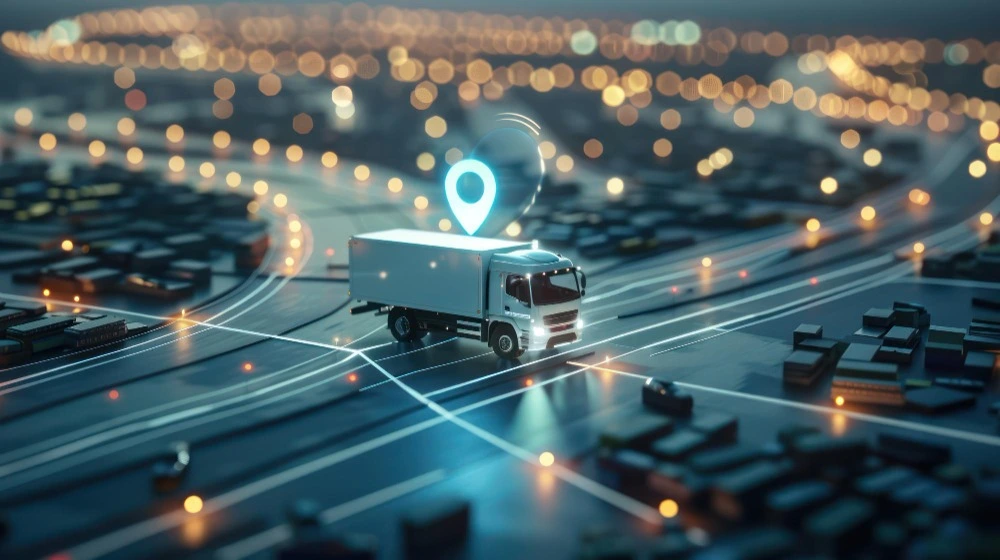
Route planning is where fleet profit is won or lost. According to reports, a driver with ten stops can choose from over three million possible routes, and no dispatcher can compare them by hand. This guide explains how AI solves that problem and how it fits into your existing systems. En Route Technologies brings tracking, dispatching, fuel monitoring and analytics into a single platform, giving planners the live data AI needs to make better decisions.
3M+
Possible routes for a driver with just ten stops, according to reports
15–30%
Mileage reduction that route optimisation can deliver, according to reports
98%
On-time arrivals that route optimisation can support, according to reports
AI evaluates thousands of route options in seconds and selects the one that best balances distance, time, fuel and customer commitments. Instead of static maps, it learns from historical trips and live conditions.
Efficiency also means consistency. When every dispatcher follows the same optimised logic, results no longer depend on who builds the plan that day.
Fact
UPS’s AI routing system, ORION, is credited with removing roughly 100 million miles and saving about 10 million gallons of fuel every year.
The more accurate your data, the better the output, which is why reliable tracking hardware and clean order information matter as much as the algorithm itself.
| Component | What It Does |
|---|---|
| Data engine | Gathers GPS, telematics, traffic and order data |
| Optimisation algorithm | Calculates the best stop sequence and path |
| Constraint manager | Applies time windows, capacity and driver rules |
| Live tracking and alerts | Monitors progress, geofences and deviations |
| Driver app | Delivers directions and updates job status |
| Analytics dashboard | Reports performance, costs and trends |
AI fleet management goes beyond routing by giving managers one connected view of vehicles, drivers and costs.
Pro tip
Set two or three measurable goals, such as fuel per kilometre and on-time rate, before rollout so you can prove results.
Route optimisation can reduce mileage by roughly 15 to 30 percent and support up to 98 percent on-time arrivals.
Pro tip
Start with your busiest routes. Early wins there quickly build team confidence.
Multi-stop sequencing decides the best order for visiting many stops. It is a version of the classic travelling salesman problem, which grows explosively: ten stops create over three million possible orders.
AI weighs delivery windows, stop priority, service time, traffic patterns and driver hours, then produces tighter routes with less backtracking. Fleets running fixed timetables, such as staff shuttles, benefit most, which is why En Route offers scheduled route service and shuttle management tools.
Pro tip
Group stops by zone first, then sequence within each zone. This keeps routes compact and easier for drivers to follow.
Plans rarely survive contact with the road. Real-time re-routing monitors live conditions and redirects vehicles when accidents, congestion, weather or urgent jobs appear.
En Route’s GPS tracking system provides live location updates, geofencing and alerts, so deviations are visible the moment they happen.
Re-routing should respect your rules. Good systems protect priority deliveries and driver working hours rather than simply chasing the shortest path.
AI predicts arrival times by combining live location, current speed, traffic, historical trip durations and expected time at each stop. Unlike a basic map estimate, it learns that a particular warehouse always takes twenty minutes to unload.
Pro tip
Feed actual service times back into the system. Accuracy improves quickly once the model knows real stop durations.
Routes only work if the vehicle can carry the load. AI matches orders to vehicles using weight, volume, cargo type and availability, avoiding overloaded trucks and half-empty vans.
| Capacity Factor | AI Action |
|---|---|
| Weight and volume | Assigns loads within vehicle limits |
| Cargo type | Matches special or temperature-controlled vehicles |
| Vehicle availability | Balances jobs across the fleet |
| Return journeys | Reduces empty trips back to base |
FedEx has reported that matching the right vehicle to each route delivered its biggest fuel-efficiency gain.
Pro tip
Keep vehicle capacity data current. Outdated payload or volume limits lead to poor assignments.
Fuel is usually a fleet’s largest variable cost. AI reduces consumption by choosing routes with fewer stops, less congestion and steadier speeds, while telematics highlights habits that burn fuel.
Pro tip
Review idling reports weekly and share them with drivers. Visibility alone often changes behaviour.
| Saving Source | How AI Helps |
|---|---|
| Shorter distances | Cuts total kilometres driven |
| Less idling | Avoids congestion and long waits |
| Smoother driving | Favours steadier routes and speeds |
| Right vehicle choice | Matches loads to suitable vehicles |
| Fewer wasted trips | Eliminates backtracking and missed deliveries |
Fact
UPS says removing just one mile per driver per day saves up to $50 million annually.
Pro tip
Track fuel cost per kilometre before and after rollout to prove your return.
Analytics turns route data into decisions. Dashboards compare planned and actual routes, expose late stops and rank drivers and vehicles. En Route’s reporting and analytics tools bring this insight into one place.
Review these figures weekly and monthly. Patterns, such as one route that is always late, reveal where to adjust stop order, time windows or vehicle assignments.
Integration removes duplicate data entry and creates one source of truth.
Pro tip
Before choosing a tool, check that it connects with your tracking devices, order systems and driver apps.
| Feature | Purpose | Key Benefit |
|---|---|---|
| AI-Powered Route Optimization | Identifies efficient routes based on multiple factors | Reduces travel time and fuel costs |
| Real-Time Fleet Tracking | Monitors vehicle locations and movement | Improves fleet visibility and control |
| Smart Dispatching | Assigns vehicles and tasks based on operational needs | Improves dispatch efficiency |
| Traffic and Delay Management | Helps teams respond to traffic and route disruptions | Supports on-time deliveries and services |
Always confirm current features with each vendor before deciding.
AI-powered route planning helps fleet operators plan efficient journeys, coordinate vehicle assignments, and improve daily operations. By considering factors such as traffic conditions, delivery schedules, travel distances, and vehicle availability, businesses can make smarter routing decisions. When integrated with fleet management software, route planning works alongside vehicle tracking, dispatching, and performance reporting to provide better operational visibility. This approach can help reduce unnecessary mileage, control fuel costs, improve vehicle utilization, and support timely service delivery across fleet operations.
AI route planning turns every trip into a smarter, cheaper and more predictable journey. Start with clear goals, clean data and the right integrated platform, and the savings follow.
Book a demo with En Route Technologies today.