
Fleet Dispatch Guide · En Route Technologies
Quick answer: A dispatch queue management system collects jobs, ranks them and matches each one to the best driver and vehicle. It cuts assignment time, fuel and idle costs, and it re-sorts the queue in real time when traffic, breakdowns or urgent jobs change the plan. En Route Technologies supports this workflow with dynamic routing, smart dispatch and a driver app.
Table of contents
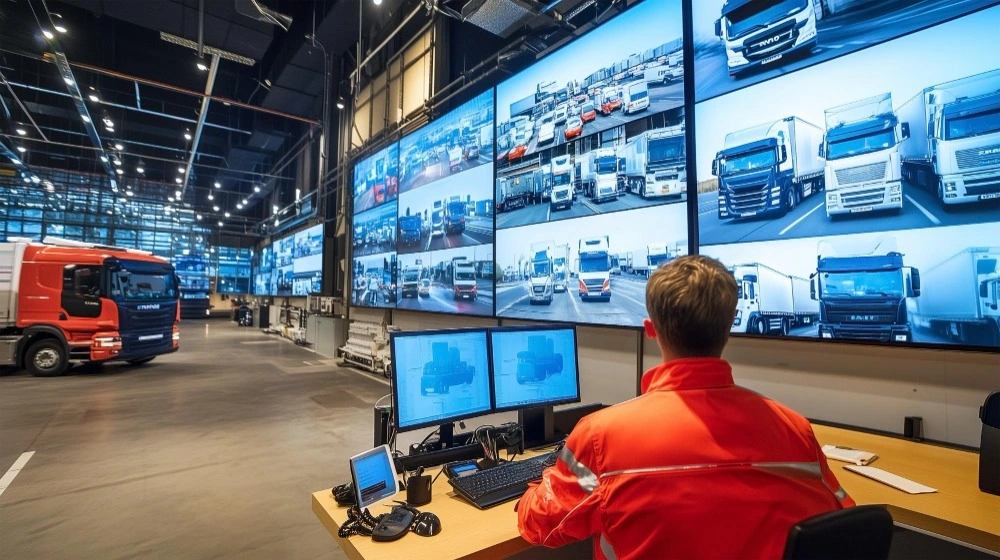
A dispatch queue management system collects incoming jobs, ranks them by priority and matches each one to the best available driver and vehicle. It then sends the job to the driver and tracks it until completion. For UAE fleets, this replaces phone calls and spreadsheets with one live queue. En Route Technologies supports this workflow through its fleet management system and route planning and optimization tools.
This guide explains how a dispatch queue management system transforms fleet and logistics operations in the UAE. First, we cover what it is and what it saves. Then we compare manual and automatic dispatch, look at AI, and show how En Route helps.
400,000
Truck journeys on Dubai roads every day, according to the RTA
25%
Share of Dubai trips the RTA targets to make autonomous by 2030
75%
Equipment fleets still using manual logs, alone or alongside digital tools, in a 2025 industry survey
A dispatch queue management system is software that turns a pile of incoming jobs into an ordered, prioritized queue and assigns each job to the best driver and vehicle. It keeps the queue current as conditions change. As a result, fleets respond faster and waste less.
A dispatch queue is the list of jobs that wait for assignment. Jobs enter from orders, calls, customer portals or schedules. Each job has a location, a time window, a priority and requirements, such as vehicle type or driver skill. Without a queue, these details live in heads and notebooks.
Freight and logistics companies use it to match loads to trucks. Last-mile fleets use it to balance drop-offs. Field service teams use it for appointments. Shuttle and passenger operators use it for pickups. See En Route’s logistics and freight solutions, delivery and last-mile solutions, shuttle service management and government and municipal fleet management pages.
A job list only records work. A queue actively decides the order and the match. It also reacts when a driver is late, a job is canceled or an urgent request arrives.
A dispatch queue management system reduces time and cost by cutting the minutes spent on each assignment and the kilometers, idle hours and overtime that poor assignments create. The savings add up across every job, every day.
In manual dispatch, a dispatcher finds a free vehicle, calls the driver, checks skills and confirms the job. Each step takes minutes. Then the same dispatcher repeats the process for the next job. At busy times, the queue grows faster than anyone can clear it.
Poor assignments waste fuel and time. The U.S. Department of Energy says an idling heavy truck burns about 3 liters an hour. At the October 2026 UAE diesel price of AED 4.80 per liter, that is about AED 14 for each hour of idling. Wrong-vehicle jobs, long detours and late arrivals add overtime and lost customers.
The numbers below are illustrative, not En Route results. Imagine a fleet that handles 80 jobs a day. A dispatcher needs 6 minutes per manual assignment. A queue system cuts that to 2 minutes. The saving is 4 minutes on each of 80 jobs, or about 5.3 hours a day. Over 26 working days, that is about 139 dispatcher hours a month.
Now add fuel. Suppose better matching saves 5 km on each of 40 routes a day. At 28 liters per 100 km, that is 56 liters a day, or about AED 269 a day at AED 4.80 per liter. Over 26 days, that is about AED 6,989 a month. If the same system also cuts half an hour of idling on each of 40 trucks, it saves about AED 288 a day, or AED 7,488 a month.
The future of the dispatch queue management system in the UAE is AI-assisted, event-driven and ready for mixed fleets of human-driven and autonomous vehicles. Official UAE strategies point strongly in this direction. People will still set the rules and handle exceptions.
Dubai’s Self-Driving Transport Strategy aims to make 25% of all trips autonomous by 2030. In September 2025, the RTA also approved a regulatory framework for autonomous heavy vehicles in logistics, as part of its Commercial and Logistics Land Transport Strategy 2030. The UAE federal government has also placed artificial intelligence at the core of its 2031 planning cycle.
Dispatchers will still handle exceptions, difficult customers and judgment calls. AI handles the routine. As a result, dispatchers move from typing and calling to supervising and deciding.
Start with clean data. Give every vehicle and driver a unique ID. Capture job times and outcomes. Use a platform with open APIs. Fleets that do this now will adopt AI features faster and with less risk.
Manual dispatch fails because people cannot track dozens of changing variables by phone and paper without mistakes. Mistakes are not a sign of poor staff. They are a sign of a weak system.
A wrong match means a second trip. A double booking means a late delivery. A lost note means a repeat call. Also, each mistake takes dispatcher time to fix, so the queue grows even longer.
The UAE e-commerce market reached AED 42.2 billion in 2025, up from AED 17.6 billion in 2020. More orders mean more jobs per day. In a 2025 survey of equipment fleets, about 75% still relied on manual logs, alone or alongside digital tools. Manual methods that work for ten jobs fail at a hundred.
En Route provides dispatch queue management through dynamic route optimization, emergency and smart dispatch, automatic pairing and reassignment, fleet territories and a driver app with real-time dispatch communication. These tools work together on one platform. En Route does not use the term “queue management” on its product pages, but its dispatch features cover the same workflow.
When last-minute changes occur, such as new orders, canceled jobs or sudden traffic disruptions, En Route’s dynamic routing software recalculates the entire board on the fly. Dynamic route optimization uses AI to evaluate live variables such as traffic, new job insertions and driver availability. See the route planning and optimization page.
When an urgent job arises, the platform instantly identifies the closest available driver with the right skills and the correct vehicle type. You can dispatch that driver without derailing other scheduled stops.
En Route automatically pairs drivers, vehicles, trailers and assets based on live availability. If a driver calls in sick or a truck breaks down, the software redistributes their scheduled stops among the rest of the fleet, so deliveries and appointments are still met with minimal disruption.
The platform generates optimized fleet territories that consider geographic scope, vehicle load capacity, driver availability and customer density. When demand shifts, it adjusts boundaries to keep workloads balanced.
Drivers receive routes in the driver app with step-by-step navigation. The app also supports two-way communication between drivers and fleet managers for route updates and urgent instructions.
With En Route, you reduce cost and time by planning better routes, matching the right driver to the right job, costing jobs before they start and cutting calls and rework. The tools work from live data.
Automatic pairing and smart dispatch cut the search and the phone calls. Dispatchers see availability and location on one screen. En Route reports that fleets moving from manual check-ins to live GPS tracking see about 25% faster dispatch response within the first few months. Results vary by fleet.
Optimized multi-stop routing cuts backtracking, long idle times in traffic and excess mileage. En Route also reports about 18% lower fuel costs for fleets that move to live tracking. Fuel monitoring and Eco-Driving add detail on where fuel goes.
The system can calculate fixed and per-mile costs, labor rates and equipment usage. That gives you a projection of operating expenses before the vehicle leaves the yard. Then you can price jobs with confidence.
Real-time ETAs and in-app messages reduce back-and-forth calls. Better sequencing also helps drivers finish on time, which cuts overtime.
A dispatch queue management system maximizes fleet utilization by matching jobs to the right vehicles, balancing workloads and reducing empty time between jobs. More work per vehicle means a smaller fleet for the same output.
A small van should not carry a heavy load. A large truck should not run a tiny delivery. The queue checks capacity, equipment and skills, so each vehicle does the work it suits best.
When one area is overloaded and another is quiet, utilization suffers. Fleet territories and automatic reassignment move work to where capacity exists. Then drivers have balanced days.
Idle gaps hurt utilization. Live location lets the queue assign the next job to the nearest vehicle that is about to finish. Then the vehicle moves from one job to the next with less empty driving.
| Metric | How to Calculate | What You Do with It |
|---|---|---|
| Utilization rate | Productive hours ÷ available hours | Reassign or retire low-use vehicles |
| Jobs per vehicle per day | Completed jobs ÷ vehicles in service | Find spare capacity |
| Empty kilometers | Distance without a job ÷ total distance | Improve matching and territories |
A U.S. Department of Energy inspector-general audit found that about 28% of more than 1,700 sampled government vehicles missed local use standards. Your fleet may differ, but the lesson holds: compare real use with a target.
The benefits of an advanced dispatch queue management system in shipping and logistics are faster response, lower cost, better service, easier compliance and room to grow.
| Benefit | How It Happens | What to Track |
|---|---|---|
| Faster response | Live availability and automatic matching | Time to assign |
| Lower cost | Shorter routes, less idling, less overtime | Cost per job |
| Better service | Accurate ETAs and fewer errors | On-time delivery rate |
| Easier compliance | Digital inspections and time-stamped records | Inspection completion |
| Scalability | The queue handles more jobs without more staff | Jobs per dispatcher |
Customers notice speed and accuracy. A good queue answers urgent requests quickly and gives real-time ETAs. As a result, tight delivery windows are met more often.
Less backtracking and idling cut fuel. Digital checklists and records make audits easier. En Route’s reporting and analytics tools support this evidence trail.
A queue scales with volume. Dispatchers supervise exceptions instead of handling every job. So you can add vehicles and customers without adding the same number of staff.
You track your fleet in real time and schedule tasks by combining a live map, multi-stop route planning, time windows and approved routes, both within the UAE and across borders. The queue uses all of these inputs.
En Route’s GPS tracking system can refresh vehicle locations as often as every 1 to 2 seconds, depending on configuration. Dispatchers see where each vehicle is and what it is doing, so assignments use facts.
Dynamic multi-stop routing arranges complex schedules by business priorities, vehicle capacities and delivery windows. Fixed timetables, such as staff shuttles, run through the scheduled route service.
Dubai’s RTA and Dubai Police began applying truck movement restrictions on 1 October 2026, with Emirates Road exempt. Trucks that must move in restricted hours need a permit. Plan queue priorities and time windows around these rules.
Cross-border jobs need extra care. Abu Dhabi Customs’ pre-arrival system for trucks at Al Ghuwaifat asks for the customs declaration number and the Saudi clearance permit details before a transit permit is issued. Build buffer time into schedules and track waits. Each country has its own tracking and approval rules, and En Route’s approvals are UAE-specific, so confirm local requirements for every country on your route.
With En Route’s driver app, drivers complete checklists, report defects, send photos and receive dispatch updates digitally, which removes paper errors at the source. The data reaches the dispatch and maintenance teams at once.
Drivers complete mandatory vehicle inspections directly in the app. The data is submitted instantly, so issues surface before the vehicle leaves the yard. Electronic checklists also help eliminate “pencil whipping”. See En Route’s digital vehicle inspections.
Drivers report mechanical defects or damage by uploading photos and structured details. The report goes straight to the maintenance team to start a work order. As a result, a faulty vehicle is flagged before it takes a job.
The app supports real-time communication between drivers and fleet managers for route updates and urgent instructions. Fewer phone calls mean fewer misunderstandings.
A digital document vault lets drivers show vehicle registration and site access passes from their phones. Time-stamped photos document scenes and damage, which helps resolve disputes. A one-tap SOS button sends the driver’s live location to fleet management.
Automatic dispatch queue management beats manual dispatch on speed, accuracy, cost and visibility. The table compares them side by side.
| Area | Manual Dispatch | Automatic Dispatch Queue System |
|---|---|---|
| Job intake | Calls, messages and notes | One shared queue |
| Prioritization | Based on memory | Rules for urgency, windows and value |
| Vehicle matching | Guesswork and phone calls | Location, capacity, skills and availability |
| Response to change | Slow, one call at a time | Instant re-sorting of the queue |
| Driver communication | Phone and paper | In-app routes, messages and checklists |
| Status visibility | Ask the driver | Live map and ETAs |
| Errors | Double booking and wrong matches | Automatic checks reduce them |
| Records | Paper and spreadsheets | Time-stamped digital history |
| Scaling | Needs more dispatchers | Handles more jobs per dispatcher |
Manual dispatch depends on people remembering and calling. Automatic dispatch depends on data and rules. The second approach is faster and more consistent, and it creates records for review.
A very small fleet with a few predictable jobs may manage without a queue system. Once jobs, vehicles and time windows grow, the gaps appear quickly.
AI-driven dispatch optimization learns from outcomes by comparing what was planned with what happened, then using those patterns to improve future ETAs, service times and assignments. It does not replace dispatchers. It gives them better suggestions.
Rule-based dispatch applies the same logic every time. For example, it may always pick the nearest driver. Learning systems add history. They notice that a certain site always takes 40 minutes to unload, or that a route is slow on Thursdays. En Route’s dynamic route optimization already uses AI to evaluate live variables as they change.
With better stop times, ETAs become more accurate. With better route history, plans become more realistic. And with override data, the system learns what dispatchers value. Over months, assignments need fewer manual fixes.
Keep humans in charge of exceptions. Review suggestions that look odd. Check data quality often, since poor data teaches poor lessons. Driver and location data are also personal data under the UAE Personal Data Protection Law, so limit access and keep a written policy.
Event-driven re-routing means the queue reacts automatically when an event changes the plan, such as traffic, a new urgent job, a cancellation, a breakdown or a late arrival. Exception handling then turns the problem into a quick, logged fix.
A truck breaks down with six stops left. The dispatcher or the system finds the nearby vehicles with capacity. The software redistributes the six stops among them. The drivers get new routes in the app, and customers receive updated ETAs. En Route’s platform supports this kind of immediate reassignment.
Fast re-routing means little if customers do not know. Real-time ETAs let you update them as plans change. Clear updates turn a problem into a service moment.
AI improves the ROI of dispatch queue optimization by raising savings in time, fuel and overtime while the system cost stays fixed. Better matching and faster re-planning increase the return from every job.
ROI = (annual savings − annual system cost) ÷ annual system cost. Savings come from dispatcher time, fuel, idle hours, overtime and avoided rentals or lost jobs.
| Lever | What AI and Automation Do | What to Measure |
|---|---|---|
| Dispatcher time | Automate matching and re-planning | Minutes per assignment |
| Fuel and mileage | Shorter, better-sequenced routes | Kilometers per job |
| Idle time | Fewer waits and better timing | Idle hours per vehicle |
| Overtime | More realistic schedules | Overtime hours |
| Service quality | Accurate ETAs and fewer misses | On-time rate |
Use the illustrative fleet from earlier. Saving 139 dispatcher hours a month at an assumed AED 60 per hour is about AED 100,080 a year. The fuel saving from shorter routes is about AED 83,868 a year, and the idle saving is about AED 89,856 a year. Together, that is about AED 273,804 a year. If the system costs an assumed AED 120,000 a year, ROI is about 128%. These are assumptions, so replace them with your own numbers.
Dispatch software is the execution layer that turns planned work into completed deliveries, and an AI decision layer sits on top to choose the best assignments and re-plan as conditions change. Together, they power queue optimization.
Dispatch software receives jobs, assigns them, sends instructions to drivers, tracks progress and records results. It is the link between the office and the road. En Route’s fleet management system and driver app provide this link.
The decision layer looks at live variables, such as traffic, job insertions and driver availability, and recommends or makes assignments. It runs constantly, not only at the start of a shift. People set the rules, review the results and handle exceptions.
| Layer | Role | Example Inputs and Outputs |
|---|---|---|
| Data layer | Collect live facts | GPS, telematics, job status, driver app data |
| Decision layer | Choose and re-plan | Priorities, matches, route changes |
| Execution layer | Deliver the plan | Driver app routes, messages, ETAs |
| Feedback layer | Learn and report | Actual times, costs, exceptions |
For the data layer, see En Route’s telematics and IoT platform. For reports, see reporting and analytics.
A dispatch queue management system brings order to dispatch. It captures jobs, matches them to the right drivers and vehicles, and re-sorts the queue as events happen. For UAE fleets, that means faster response, lower fuel and idle costs, better service and records that stand up to review.
Pick one depot, record a baseline and run a 90-day pilot. Then compare time, kilometers, idle hours and overtime. En Route Technologies brings dispatch, live tracking, the driver app and reporting together on one platform. Explore the fleet management system or contact the team to plan your pilot.
A dispatch queue management system collects incoming jobs, ranks them by priority and matches each one to the best available driver and vehicle. It then sends the job to the driver and tracks it until completion.
It cuts the minutes spent on each assignment, shortens routes, reduces idle time and lowers overtime. For example, an idling heavy truck burns about 3 liters an hour, which is about AED 14 an hour at the October 2026 UAE diesel price.
People cannot track many changing variables by phone and paper. As a result, manual dispatch causes slow response, double bookings, wrong matches, lost information and no live status.
En Route offers dynamic route optimization, emergency and smart dispatch, automatic pairing and reassignment, fleet territories and a driver app with real-time dispatch communication. Together these cover the same workflow, although En Route does not use the term on its product pages.
AI evaluates live variables such as traffic, new jobs and driver availability. It also learns from outcomes, such as real stop times, to improve ETAs and assignments. People still supervise exceptions.
The platform allows immediate reassignment. The software redistributes the affected stops among the rest of the fleet, so deliveries and appointments are still met with minimal disruption.
You can plan and track cross-border jobs on one platform. Each country has its own tracking and approval rules, and En Route’s approvals are UAE-specific, so confirm local requirements. Also build buffer time for customs and border waits.
Record a baseline for assignment time, kilometers, idle hours and overtime. Run a pilot, compare the same measures after 30, 60 and 90 days, convert the changes into dirhams and compare them with the annual system cost.
Book a demo to see dynamic routing, smart dispatch and the driver app working together for your fleet.