
Fleet Management Guide · En Route Technologies
Quick answer: A delivery truck tracking system uses GPS tracking devices and cellular connectivity to show every truck’s live location, speed and status on one dashboard. In the UAE, the best systems are regulator-certified, update every 1–2 seconds and combine driver monitoring, AI dashcams, fuel tools and anti-theft controls. En Route Technologies delivers all of this on one platform.
Table of contents
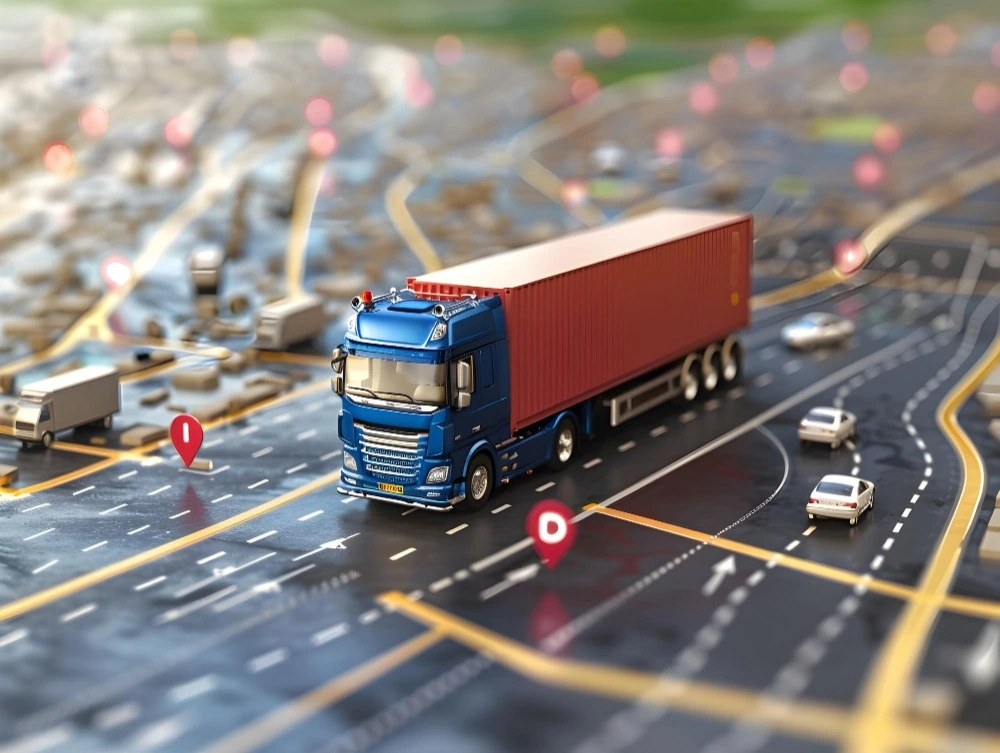
A delivery truck tracking system combines with GPS tracking system and GPS hardware in the vehicle, cellular connectivity and cloud software to show where every truck is, how it is being driven and what is happening to its cargo, in real time. In the UAE, where delivery volumes are rising and road rules are tightening, it has become a daily operating tool rather than an optional extra.
400,000
Truck journeys on Dubai roads every day, according to the RTA
AED 42.2bn
UAE e-commerce market in 2025, up from AED 17.6bn in 2020
Up to 52%
Fewer safety-related events at one carrier after video monitoring and coaching
The UAE e-commerce market reached AED 42.2 billion in 2025, up from AED 17.6 billion in 2020, a compound annual growth rate of 19%, according to a report covered by the Emirates News Agency (WAM). Every extra online order adds a stop, a delivery window and a chance to run late. Dispatchers who rely on phone calls and spreadsheets cannot keep up with that volume.
Dubai’s Roads and Transport Authority (RTA) and Dubai Police began applying truck movement restrictions across the emirate on 1 October 2026, in line with peak-hour traffic controls, with Emirates Road exempt (WAM). Timings vary by corridor, area and congestion level. The RTA says Dubai sees about 400,000 truck journeys every day, and companies that must move trucks during restricted hours in essential cases need to apply for its Mobility Permit for Heavy Vehicles in Banned Times and Roads.
Fleets that can see every truck live, and compare planned routes with actual ones, are far better placed to stay inside these rules and still deliver on time.
This guide explains the best types of truck management system solutions in the UAE, how real-time GPS tracking benefits operations, how to track a truck step by step, which fleet management features matter, how AI dashcams improve road safety, how to prevent theft, and how to turn GPS data into business decisions.
The best delivery truck tracking solution in the UAE is a regulator-certified fleet management platform that combines live GPS tracking, driver behavior monitoring, AI video, fuel and maintenance tools in one dashboard. For most delivery fleets, that means choosing a provider such as En Route Technologies rather than a stand-alone GPS tracker.
Delivery fleets in the UAE usually choose from four types of solution. The right one depends on fleet size, vehicle type and how much visibility you need.
| Solution Type | Best For | Strengths | Limitations |
|---|---|---|---|
| Basic GPS tracker | Single trucks and very small fleets | Low cost; shows live location and trip history | Little insight into drivers, fuel or maintenance |
| OBD plug-in tracker | Light delivery vans | Quick to fit; reads mileage and some engine data | Not suited to every heavy truck; can be unplugged |
| Fleet management platform | Growing and large delivery fleets | Tracking, dispatch, routing, fuel, maintenance, reports and APIs in one place | Needs initial setup and clear internal processes |
| AI video telematics | Safety-focused and high-liability fleets | In-cab alerts, dual-facing video and incident evidence | Extra hardware; needs a clear privacy policy |
For most delivery fleets, the strongest option combines the last two rows: a certified fleet management platform with AI video added where safety and liability matter most.
En Route Technologies is a UAE fleet management provider based in Dubai Silicon Oasis. Its platform brings GPS tracking system, dispatching, route planning, AI dashcam solutions, fuel management, maintenance and reporting into a single system. According to its certifications and compliance page, En Route holds SIRA SecurePath Premium approval, ASATEEL certification for Abu Dhabi, RAKway certification for Ras Al Khaimah and ISO 9001:2015 certification.
The platform supports Arabic, English and Urdu/Hindi, connects to systems such as SAP and Oracle through standard web APIs, and can refresh vehicle locations as often as every 1 to 2 seconds depending on configuration. Explore the full fleet management system to see how the pieces fit together.
Real-time GPS tracking benefits delivery truck operations by showing every truck’s position and status live, which speeds up dispatch, produces accurate arrival times, cuts idling and fuel waste, and creates a verifiable record of every trip and stop.
When an urgent order arrives, dispatchers can see which truck is closest, what vehicle type it is and which driver is available. En Route automatically pairs vehicles, assets and drivers, and its emergency dispatch tools identify the closest driver with the right skills and vehicle. Because locations refresh as often as every 1 to 2 seconds, the ETA you give a customer reflects where the truck actually is.
The U.S. Department of Energy estimates that idling a heavy-duty truck burns about 0.8 gallons of fuel per hour, roughly 3 liters (U.S. Department of Energy). In UAE summers, drivers are tempted to keep engines and air conditioning running while they wait at loading bays, so idle hours add up quickly. Idle reports show which trucks, drivers and customer sites cause the most waiting, and route history shows where detours add distance.
Geofences automatically log when a truck arrives at and leaves a customer site, and trip history with route playback shows exactly what happened. En Route can send an email or SMS alert the moment a vehicle crosses a boundary, removing manual check-ins and giving you timestamps to settle delivery disputes.
Because Dubai’s restrictions vary by corridor and time, dispatchers need to know early whether a truck will reach a restricted road before the window opens. Live tracking combined with plan-versus-actual route views makes that visible, so you can re-sequence stops or send the driver to a designated truck rest stop in time.
Example
A truck is 20 minutes from a restricted corridor with six stops left. With live data, the dispatcher re-sequences the remaining stops or directs the driver to a rest stop. Without it, the problem only appears when the truck is already stuck.
To track a delivery truck in real time in the UAE, install a certified GPS tracker in the truck, activate it on a fleet management platform, and open the live map from a browser or mobile app. Then add geofences and alerts so the system tells you when a truck leaves its route, stops too long or arrives late.
Abu Dhabi’s Integrated Transport Centre requires freight vehicles to be fitted with an electronic tracking device linked to its Asateel platform (Gulf News), while SIRA’s SecurePath scheme covers regulated vehicle categories in Dubai and Sharjah. Requirements depend on the vehicle type and activity, so confirm them with the relevant authority or your certified provider. A fleet that crosses emirate borders every day needs one platform certified in each.
A modern fleet management system should include live GPS tracking, dispatch and route planning, driver behavior monitoring, video safety, fuel management, maintenance scheduling, digital inspections, reporting and open APIs in one platform, rather than a patchwork of separate tools.
The foundation is a live map with geofencing, trip history and smart dispatch. Dynamic multi-stop route scheduling reduces wasted mileage, and route-plan-versus-actual views show where drivers departed from the plan. See how this works in the En Route GPS tracking system.
Look for automatic detection of speeding, harsh braking, rapid acceleration and hard cornering, plus driver scoring, coaching tools and leaderboards. A mobile driver app keeps drivers connected to jobs, inspections and instructions.
Fuel trend reporting exposes waste, while service history, work orders and maintenance reminders keep vehicles on the road. This matters: Ministry of Interior data shows heavy trucks were involved in 325 UAE traffic accidents in 2025, with tyre problems and poor maintenance cited among contributing factors (Gulf News). Digital checklists, such as those in En Route’s vehicle inspection feature, catch defects before they become incidents.
Scheduled reports, hours and logging records, and APIs that connect to ERP, billing and payroll systems turn raw data into a single source of truth. The reporting and analytics tools in En Route put these insights in one place.
Look for regulator-approved hardware, fast and reliable location updates, geofencing with instant alerts, driver behavior and fuel monitoring, optional AI video and anti-theft controls, open APIs, and local support in your language.
Ask whether the device is rated for extreme heat and dust, whether it stores data when coverage drops and uploads it when the signal returns, and whether trailers and containers can be tracked without vehicle power. En Route offers asset gateways with their own long-life batteries for trailers, containers and heavy machinery.
Keep in mind
A tracker without the right approval can delay vehicle registration or fail an audit. Check certification before you compare price.
AI dashcams watch the road and the driver in real time, detect phone use, fatigue and tailgating, and sound an in-cab alert before an incident happens. Combined with coaching, video-based monitoring cut safety-related events by 37% to 52% at two carriers in a study for the U.S. Federal Motor Carrier Safety Administration.
GPS and telematics data already show a lot: speeding, harsh braking, rapid acceleration, hard cornering and long idling. Classifying these events per driver and per 1,000 km turns scattered incidents into a clear risk picture, and leaderboards give drivers a fair, visible target.
A traditional dashcam only records. An AI dashcam scans the road and the driver using machine learning, and can flag phone use, fatigue and tailgating with an audible warning inside the cab. En Route’s AI dashcam solutions use dual-facing cameras for the road and the cabin, upload HD clips to the cloud within minutes tagged with speed, location and G-force, and support extended-view cameras that reduce blind spots on heavy vehicles.
A study by the Virginia Tech Transportation Institute for the U.S. Federal Motor Carrier Safety Administration followed drivers for 17 weeks. One carrier reduced recorded safety-related events per mile by 37% and the other by 52.2% once managers could see events and coach drivers (Hickman, Hanowski and Ajayi, 2009). The study used U.S. carriers, so results will vary, but the lesson holds: video works best when paired with coaching.
The UAE recorded 6,014 major road accidents in 2025, and sudden swerving, tailgating and distraction together accounted for more than a third of them, according to Ministry of Interior figures (Khaleej Times). These are exactly the behaviors AI dashcams are built to catch. Heavy trucks were involved in 1,136 accidents between 2022 and 2025, so the stakes for delivery fleets are high.
Tell drivers what the system records and why, review events promptly, recognize good driving and use video to protect drivers from false claims. Fleets that treat cameras as a coaching tool see better results than those that treat them as surveillance.
Keep in mind
Cameras and location tracking collect personal data. The UAE Personal Data Protection Law (Federal Decree-Law No. 45 of 2021) treats data such as images and location as personal data and makes consent its main legal basis (UAE Legislation). Write a clear policy and take legal advice for your situation.
Layered security protects delivery trucks: unauthorized-movement alerts, geofences, driver identification, cargo cameras and, where fitted, remote immobilization that stops a stolen truck from restarting. The aim is to detect problems early, respond quickly and keep a clear audit trail.
Delivery trucks carry valuable loads, make frequent stops, often run at night and may cross remote industrial or desert routes where help is far away. Parked overnight in yards or at roadsides, they are easy to move without anyone noticing unless the system alerts you.
Remote immobilization lets an authorized manager stop a truck from restarting. It usually works through a relay on the starter or ignition circuit that the tracker controls. Best practice is to apply it only when the truck is stationary with the ignition off, never while it is moving, because cutting power to a moving truck creates a road hazard. Set written rules on who can authorize it, reserve it for confirmed theft or unauthorized use, and always involve the police. Ask your En Route consultant which immobilization options suit your vehicle models.
Fuel sensors and fuel trend reports help flag unusual drops, while cargo cameras and geofenced yards deter tampering. Reviewing the eco-driving and fuel data side by side separates genuine consumption from loss.
A tracking platform holds sensitive location data, so security extends to the software. Look for providers that document consent management, data residency options, data processing agreements and breach notification. En Route states that its platform is designed to comply with the UAE PDPL, with a 72-hour breach notification protocol and on-premises or private cloud deployment options for organizations with data sovereignty requirements; details are on its certifications page.
GPS data becomes valuable when you track a small set of KPIs, review them on a fixed schedule and act on the findings: tighter routes, targeted driver coaching, planned maintenance and better-priced delivery contracts.
| Metric | What It Tells You | Typical Decision |
|---|---|---|
| On-time delivery rate | Reliability against promised windows | Adjust routes, time windows or vehicle allocation |
| Idle time | Wasted fuel and engine wear | Coach drivers; fix delays at loading bays |
| Plan vs actual route | How closely drivers follow the plan | Fix stop order; investigate detours |
| Harsh events per 1,000 km | Driver risk | Targeted coaching and recognition |
| Cost per delivery | Unit economics by route and customer | Rebalance workloads; reprice contracts |
| Maintenance due vs completed | Downtime risk | Schedule service before failures |
Take an illustrative fleet of 20 heavy trucks that each idle 45 minutes a day. Using the U.S. Department of Energy rate of about 3 liters per hour for heavy-duty trucks, that is roughly 45 liters a day, or about 13,500 liters over 300 working days. Halving idle time would save around 6,750 liters a year. Actual figures depend on vehicle type, load and climate, but the exercise shows why idle reports pay for themselves.
Through standard web APIs, En Route can send GPS, mileage and geofence data into enterprise systems such as SAP or Oracle, so payroll, billing and resource planning use the same trusted records. Explore the telematics and IoT platform for more on connected data.
It depends on the emirate, the vehicle category and the activity. Abu Dhabi’s Integrated Transport Centre requires freight vehicles to carry an approved electronic tracking device linked to its Asateel platform, and Dubai and Sharjah use SIRA’s SecurePath scheme for regulated vehicle categories. Even where it is not mandatory, tracking is standard practice for delivery fleets. Confirm your obligations with the relevant authority or a certified provider such as En Route Technologies.
It depends on the hardware and configuration. The En Route platform can refresh locations as often as every 1 to 2 seconds while a vehicle is moving, which supports live follow mode and accurate ETAs.
Yes, if your provider is certified by the authority in each emirate where you operate. En Route lists SIRA SecurePath Premium (Dubai and Sharjah), ASATEEL (Abu Dhabi) and RAKway (Ras Al Khaimah) certifications on its certifications page.
A regular dashcam passively records video to a memory card. An AI dashcam analyzes the road and the driver in real time, detects behaviors such as phone use, fatigue and tailgating, and triggers an immediate in-cab alert, and it can upload incident footage to the cloud within minutes.
Location data and images count as personal data under the UAE Personal Data Protection Law (Federal Decree-Law No. 45 of 2021), and consent is its main legal basis for processing. Tell drivers what you track and why, limit who can see the data and keep a written policy. This is general information, not legal advice.
If immobilization hardware is fitted, an authorized manager can prevent the truck from restarting once it is stationary with the ignition off. Immobilizing a moving truck is unsafe and not recommended. Combine it with live tracking and report the theft to the police straight away.
Cost depends on the hardware, features such as AI video, fleet size and contract length. Ask for a quote based on your fleet profile instead of comparing headline per-device prices, because certification, installation and support all affect total cost.
Delivery truck tracking systems are now core infrastructure for UAE fleets. They give dispatchers live visibility, drivers timely coaching, managers hard data and owners protection against theft and false claims, at a time when delivery volumes and road rules are both increasing.
Start by confirming certification for every emirate you serve, then pilot the system on a handful of trucks, set two or three measurable goals such as idle time and on-time rate, and expand once the results are clear. En Route Technologies brings certified GPS tracking, AI dashcams, fuel and maintenance tools and reporting together on one platform.
Book a demo to see live tracking, AI dashcams and fleet reporting working together on your routes.