
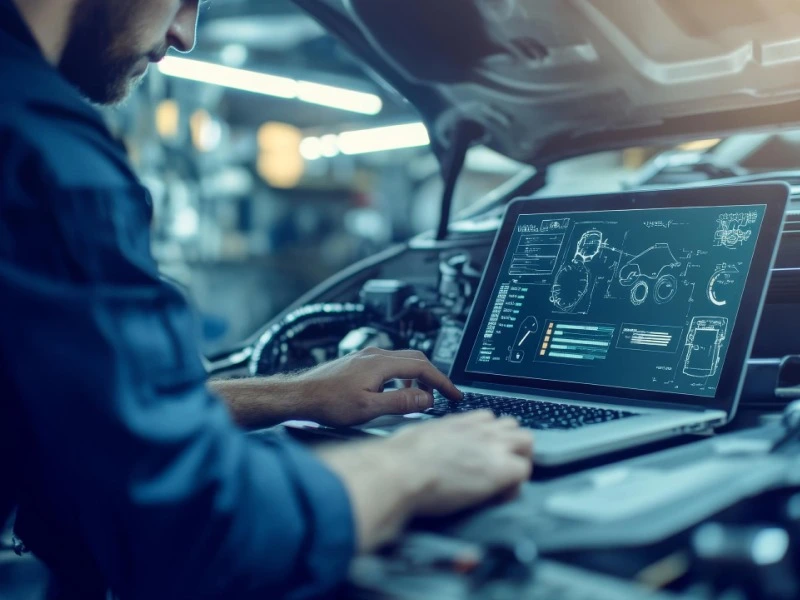
Why Digital Workshop Management Matters
Using digital workshop management allows garage owners to automate parts of the business, cut down on manual labor, improve accuracy when it comes to repairs, and create a positive impact on technician productivity and customer satisfaction via centralized data and the ability to track things in real time.
When it comes to business operations, traditional workshops need to move away from the use of disjointed spreadsheets and handwritten documents. What they need is a centralized, integrated platform to consolidate everything.
With digital management systems, service advisors can quickly register vehicles, technicians can instantaneously receive work orders, inventory personnel can view and manage inventory at all times, and managers can control the performance of the workgroup using the same dashboard.
This allows workshops to expedite repairs, reduce the frequency of work-related interruptions, and foster a more effective internal communication system to build and maintain positive relationships with customers.
What Is a Garage Management System?
Garage Management Systems are software that automate the management of work orders, assignments, records, and customer and inventory management and scheduling via a single, integrated platform.
Understanding the Basics
The role of a Garage Management System is to house all of the business operations of a workshop. Instead of having to employ the use of many different systems, centralized digital management systems consolidate all activities of the workshop.
The system captures and stores data on customers and their vehicles, inspection and repair requests and orders, hours and parts required for the repair and maintenance, billing, and payment records and repair history. This allows all business operations to be performed using the same, accurate, and up-to-the-minute data, thereby maximizing operational effectiveness and minimizing communication gaps.
This system also maximizes the effectiveness of business operations by promoting good practices, formalizing system usage, and providing a system for operations.
How It Differs from Manual Workshop Management
Because manual workshop management relies so heavily on paperwork, phone communication, and spoken communication, information can get lost, be replicated, or be provided in a timely manner.
A digital Garage Management Software reduces risks by keeping information securely in the cloud and allowing convenient access by authorized users.
Instead of having to dig through filing cabinets, workshop staff can access the entire history of a vehicle, related work orders, and check the inventory in seconds.
Why Businesses Are Moving to Digital Solutions
As customer expectations in the automotive industry shift and become more demanding, the industry has to adapt. Vehicle owners want regular service updates, a clear picture of what is happening to their vehicles, and easy access to their vehicle repair history.
Management of a digital workshop software helps meet the expectations of the customer and at the same time, provides a competitive advantage by increasing efficiency and decreasing the overall cost of operations.
How Does a Garage Management System Work?
A Garage Management System has a digitized workflow that allows the management of a service from the time a vehicle is registered to the time a service is considered complete.
Step 1: Vehicle Registration and Customer Details
Every service begins by registering the customer’s vehicle.
The service advisor records essential information, including:
- Customer details
- Vehicle information
- Odometer reading
- Reported issues
- Scheduled services
- Warranty status
Capturing this information digitally ensures consistency throughout the repair process.
Step 2: Creating Digital Job Cards
Once registration is complete, the system generates a digital job card.
The work order includes:
- Inspection requirements
- Repair instructions
- Required labor
- Estimated completion time
- Technician notes
- Spare parts requirements
Unlike paper-based job cards, digital records remain accessible throughout the repair lifecycle.
Step 3: Assigning Work to Technicians
The workshop manager assigns repair tasks based on technician availability, expertise, and workload.
This balanced allocation prevents bottlenecks while improving labor utilization.
Technicians receive their assigned work instantly through the system, allowing repairs to begin without unnecessary delays.
Step 4: Tracking Repair Progress
As technicians complete each task, they update the work order in real time.
Managers can monitor:
- Job status
- Technician productivity
- Labor hours
- Pending approvals
- Additional repair requirements
Real-time visibility helps managers resolve delays before they affect delivery schedules.
Step 5: Completing the Service and Updating Records
After completing repairs, the technician closes the work order.
The system automatically updates:
- Vehicle service history
- Parts consumption
- Labor records
- Customer invoice
- Maintenance schedule
This digital workflow creates a complete service record that supports future maintenance and improves customer trust.
Key Features of a Garage Management System
A modern Garage Management System combines work order management, technician scheduling, digital inspections, inventory control, customer management, reporting, and vehicle service history into one integrated platform.
Work Order Management
Digital work orders organize every repair from start to finish.
Managers can create job cards, assign technicians, monitor repair progress, and document completed work without relying on paperwork.
This structured process improves accountability while reducing administrative effort.
Workshop Scheduling
Efficient scheduling helps workshops maximize available resources.
Managers can allocate:
- Service bays
- Technicians
- Equipment
- Customer appointments
As a result, workshops reduce waiting times and improve repair turnaround.
Digital Vehicle Inspection
Digital Vehicle Inspection allows technicians to complete structured inspections using smartphones or tablets.
Technicians can:
- Capture vehicle images
- Record defects
- Add inspection notes
- Recommend repairs
- Share inspection reports
Digital inspections improve transparency while helping customers understand recommended repairs.
Vehicle Service History
In vehicle service history, every completed service automatically updates the vehicle’s maintenance history.
Having access to previous repairs helps technicians diagnose recurring issues faster while enabling service advisors to recommend future maintenance with greater confidence.
Technician Management
Workshop managers need complete visibility into technician performance.
The system tracks:
- Assigned work
- Labor hours
- Job completion rates
- Productivity
- Skill utilization
These insights support better workforce planning and operational efficiency.
Customer Relationship Management
Customer records remain available throughout every interaction.
Service advisors can quickly access:
- Contact details
- Previous repairs
- Maintenance reminders
- Warranty information
- Outstanding quotations
This improves customer service while strengthening long-term relationships.
Inventory and Spare Parts Management
The system continuously monitors inventory movement, helping workshops maintain optimal stock levels while reducing shortages and excess inventory.
Real-time stock visibility improves purchasing decisions and supports uninterrupted repair operations.
Inventory and Spare Parts Management
The system tracks inventory in real time so that workshops can make buy decisions to maintain an appropriate and uninterrupted stock of repair parts. This helps improve the quality of repairs and the satisfaction of customers.
The Repair Management system provides a digital transport and logistics Inventory Management module that resolves outdated and inefficient manual inventory stock control systems.
Maintain Accurate Stock Levels
Every repair requires different components, from engine parts to filters, brake pads, and electrical components. The system automatically updates inventory whenever technicians issue or return parts.
Managers can instantly view:
- Available stock
- Reserved inventory
- Low-stock items
- Fast-moving parts
- Slow-moving inventory
This real-time visibility helps workshops make informed purchasing decisions while reducing inventory errors.
Prevent Spare Parts Shortages
When you run out of essential spare parts it can slow down repairs, and also mess up the customer experience a bit. A Garage Management System will automatically send stock alerts once inventory hits the set minimum levels. So instead of waiting for trouble to happen , workshop managers can place reorders earlier, before the supply runs dry , and keep day to day operations moving, basically uninterrupted.
Simplify Purchase Orders
Dealing with suppliers feels way less chaotic with digital procurement workflows. Managers can form purchase orders right inside the system , then watch the deliveries, compare supplier performance , and also track procurement expenses. It’s a more streamlined flow, so there’s less paperwork involved, plus the purchasing stays more accurate.
Reduce Inventory Costs
Inventory is a major investment for any workshop. Too much stock ties up capital, but too little inventory creates service slowdowns, which nobody wants. With consumption pattern analysis, the software enables smarter stock decisions, cuts waste, and helps improve cash flow… all while service quality stays intact.
Strengthen Vendor Management
Good suppliers matter a lot for workshop efficiency. A centralized platform keeps supplier details, purchase history, pricing terms, and delivery reliability together in one place. After that, businesses can spot dependable vendors faster, negotiate improved pricing, and keep spare parts availability more consistent.
Vehicle Service History and Preventive Maintenance
A Garage Management System can keep detailed digital service records and streamline preventive maintenance systems, ensuring that workshops are able to provide proactive service, which minimizes unanticipated breakdowns and creates lasting relationships with clientele.
For workshops and vehicle owners, accurate service records are vital. Having access to a vehicle’s digital service history aids technicians in their diagnosis of a vehicle, minimizes the time spent troubleshooting an issue, and increases the accuracy of the repair.
Store Complete Digital Service Records
Every completed repair automatically updates the vehicle’s service profile.
The digital record includes:
- Previous repairs
- Maintenance dates
- Inspection reports
- Replaced components
- Labor history
- Warranty information
- Technician notes
Unlike paper records, digital histories remain secure, searchable, and accessible whenever the vehicle returns for service.
Schedule Preventive Maintenance
Preventive maintenance software helps identify wear and tear before it causes major mechanical failures.
The software automatically schedules maintenance activities based on:
- Mileage
- Engine hours
- Time intervals
- Manufacturer recommendations
- Fleet maintenance policies
Automated reminders ensure customers never miss important service appointments.
Monitor Warranty Information
Tracking warranty coverage manually can be difficult, especially for workshops handling large service volumes.
A Garage Management System records warranty details for vehicles and replacement parts, allowing service advisors to verify coverage before repairs begin.
This reduces billing disputes while improving customer confidence.
Reduce Unexpected Vehicle Breakdowns
Regular preventive maintenance significantly lowers the risk of expensive repairs.
Instead of waiting for components to fail, workshops can recommend timely replacements based on historical data and maintenance schedules.
This proactive approach minimizes downtime while extending vehicle lifespan.
Improve Customer Retention
Customers appreciate workshops that remember their service history and provide timely maintenance reminders.
Automated notifications encourage repeat visits while strengthening customer loyalty through consistent, personalized service.
Benefits of Using a Garage Management System
Garage Management Systems streamline the precision of Digital Automation Processes to increase Workshop Productivity and Repair Speed while improving Customer Satisfaction, Profitability, and Resource Optimization, and reducing Paperwork.
Digital Transformation is cross functional and results in significant improvement in every department. Integrating Workshop Operations into a single system gives businesses the power to better manage their resources and improve efficiency.
Increase Workshop Productivity
Manual administrative tasks consume valuable time that technicians and service advisors could spend serving customers.
Automation simplifies routine processes such as:
- Job card creation
- Appointment scheduling
- Technician allocation
- Inventory updates
- Customer communication
- Invoice generation
As a result, employees focus more on productive work and less on paperwork.
Complete Repairs Faster
Repair delays often occur because of poor coordination between departments.
A centralized system provides real-time visibility into repair progress, technician availability, and spare parts status. Consequently, managers can quickly resolve bottlenecks and maintain efficient workflows.
Deliver Better Customer Service
Modern customers expect transparency throughout the repair process.
Digital platforms enable workshops to share:
- Service updates
- Inspection reports
- Repair estimates
- Vehicle photographs
- Completion notifications
Clear communication builds trust while improving the overall customer experience.
Reduce Manual Paperwork
Paper records create unnecessary administrative work and increase the risk of data loss.
Digital documentation centralizes every repair record, making information easier to access, update, and analyze.
Improve Technician Utilization
Balanced technician scheduling prevents some employees from becoming overloaded while others remain underutilized.
Managers can monitor workload distribution, labor hours, and productivity metrics to maximize workforce efficiency.
Gain Better Business Visibility
Interactive dashboards provide valuable operational insights, including:
- Workshop performance
- Revenue trends
- Repair turnaround times
- Inventory consumption
- Technician productivity
- Customer satisfaction indicators
These reports support data-driven decision-making and continuous improvement.
Increase Profitability
Improved operational efficiency directly impacts financial performance.
By reducing delays, minimizing inventory waste, improving labor utilization, and increasing customer retention, workshops can maximize revenue while controlling operating costs.
Why Businesses Choose En Route Technologies
En Route Technologies offers a complete cloud-based Workshop Management Software designed to simplify automotive operations. The platform helps businesses automate work orders, digital inspections, inventory management, fleet maintenance, and reporting. With real-time data insights and centralized workflows, workshops can improve efficiency, reduce downtime, and enhance customer service. Its scalable solution supports automotive workshops, dealerships, service centers, and fleet operators.
The Future of Smart Garage Management
Improvements in garage management will stem from the use technology in AI and Predictive maintenance and service, IoT, Cloud based systems, and automation. All of these serve to help workshops offer a better customer service experience through less vehicle downtime and a greater accuracy in repairs.
The rapid pace of digital transformation in the automotive industry is due to the generation of increased diagnostic data from modern vehicles and customer demands for services to be performed in a timely manner along with communication and recommendations on repairs and maintenance to be more transparent. Because of this, workshops must utilize smarter systems and tools in order to stay in service and remain competitive.
AI-Powered Vehicle Diagnostics
AI is revolutionizing vehicle diagnostics in workshops. Much like other AI systems, these use diagnostic trouble codes, fault pattern identification, and historically provided service data to suggest repair alternatives. Until now, workshops relied on a more human-centric traverse model. With the help of AI, diagnostics and repairs can be undertaken more quickly and with more certainty. Skilled technicians are still vital, but AI enhances the repair process by providing insights and guiding repair decisions.
Predictive Maintenance
The old model of maintenance relied on a reactive approach. Component failure would necessitate maintenance, or maintenance would be performed on a strict schedule regardless of a component’s operational state. Predictive maintenance relies on data to shift the paradigm from a reactive model to a more anticipatory one. Predictive maintenance seeks to identify which components will require maintenance before they fail.
The modern Garage Management System (GMS) can integrate service and maintenance histories, operational mileages, and routine maintenance schedules to assist workshops in predicting and planning forthcoming repairs. Predictive maintenance reduces and eliminates unanticipated vehicle breakdowns and failures and significantly extends the operational lifespan of a vehicle.
IoT-Enabled Connected Workshops
Connected workshops would not be possible without the Internet of Things (IoT). Real time data exchange between vehicles, diagnostics equipment, and the workshop empower technicians and managers with a greater understanding of both vehicle health and workshop operations.
Automated diagnostics tools that are connected to the workshop system enhance the rapid and precise capture of inspection data, and reduce the incidence of manual data entry. Diagnostics failures would become a thing of the past. Real time data also enables Fleet Managers to receive repair notifications and to proactively address minor maintenance issues before they are magnified through greater operational demands placed on the vehicle.
Mobile-First Technician Workflows
Mobile technology has transformed workshop processes. Job cards and related paperwork have been made redundant as technicians can now receive job instructions, perform vehicle and equipment inspections, and report on repairs and job-related labor directly on mobile devices and tablets.
Mobile technology has enabled technicians to interact seamlessly with service advisors, and managers now have real-time access to repair progress. One of the biggest advantages of mobile technology is improved productivity, while workshops can now better address customer-related issues.
Cloud-Based Workshop Operations
Cloud technology gives businesses greater flexibility by allowing authorized users to access workshop information from any location with an internet connection. Whether managing a single garage or multiple service centers, cloud-based software keeps customer records, work orders, inventory data, and reports synchronized across all branches.
Cloud platforms also simplify software updates, improve data security, and reduce the need for on-site IT infrastructure, making them an ideal choice for growing businesses.
Data-Driven Business Intelligence
Modern workshops generate valuable operational data every day. A comprehensive Garage Management System transforms this information into actionable insights through interactive dashboards and detailed reports.
Managers can monitor key performance indicators such as:
- Repair turnaround time
- Technician productivity
- Work order completion rates
- Inventory turnover
- Revenue trends
- Customer retention
- Service demand
By analyzing these metrics, businesses can identify improvement opportunities, optimize resources, and make informed strategic decisions that support long-term growth.
Conclusion
Having a Garage Management System is a must for workshops that want to be more efficient, more customer-centric, and want to keep ahead of the competition in the digitised automotive space. To implement a Garage Management System, manual processes are replaced with workflows to better control the management of work orders, control and manage the scheduling of technicians, control and manage the checking and balancing of existing inventories, and control and manage the maintenance histories of vehicles.
An appropriate Garage Management System optimises the daily operations of a workshop to make the workshop more efficient, customer-focused, and profitable.
A Garage Management System provides a digital vehicle inspection service, preventive maintenance service, inventory service, and an integrated fleet management service. These components build a system that helps a workshop to provide the same quality service that helps grow the workshop.
Future workshops that want to meet the customer’s future expectations should employ the latest technology. The future technology that most workshops will eventually have is the use of cloud-based systems with automated predictive maintenance and smart analytics. The technology is an investment that provides a workshop with efficient operations, a loyal customer base, and the ability to be profitable and sustainable.
FAQ's
A Garage Management System is software that automates workshop operations by managing work orders, technician assignments, customer information, vehicle service history, inventory, billing, and maintenance schedules through one centralized platform.
Yes. The software creates digital work orders, assigns tasks based on technician availability and expertise, tracks repair progress, records labor hours, and helps managers monitor productivity throughout the repair lifecycle.
It automates repetitive administrative tasks, improves communication between departments, reduces paperwork, optimizes technician scheduling, tracks repair progress in real time, and provides managers with valuable operational insights.
Yes. Many modern systems include Digital Vehicle Inspection tools that allow technicians to complete structured inspections, capture photos, document findings, and generate professional inspection reports for customers.
Yes. The software stores complete digital maintenance records, including previous repairs, inspections, replaced components, warranty information, and service dates. This history supports faster diagnostics and more accurate maintenance recommendations.