
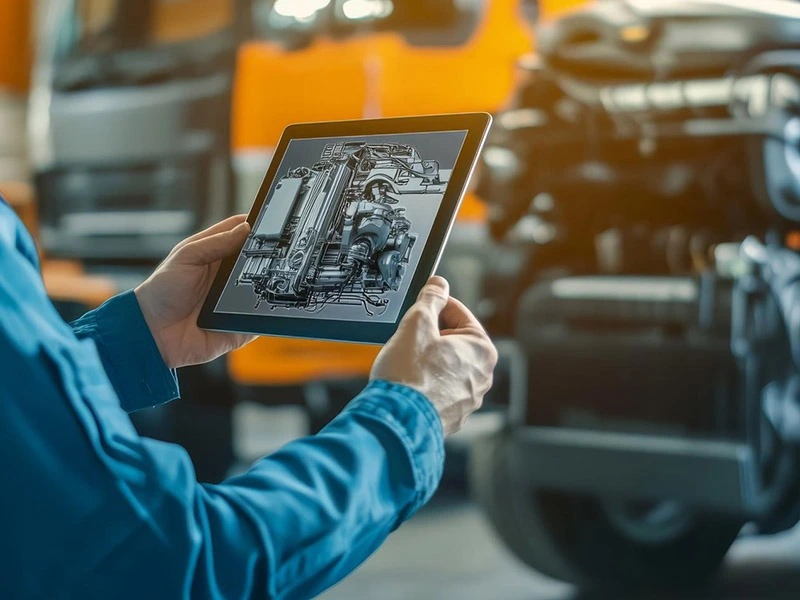
Commercial fleet maintenance system has never been more difficult. Repair costs and fuel prices hurt the bottom line while vehicle reliability and compliance requirements impact efficiency. Do you run a delivery service? Lose a vehicle and productivity drops, delivery times increase, and costs increase. Fleet maintenance doesn’t just reduce the chances of vehicle availability and dissatisfaction; the costs of small repairs add up.
Fortunately, Fleet Maintenance makes this process much easier. It helps businesses monitor vehicle health, schedule maintenance on time, track repair history, and keep every vehicle safe and road-ready, companies can fix small issues before they become major problems. This proactive approach reduces breakdowns, improves fleet reliability, and keeps operations running smoothly.
When implemented alongside Fleet Maintenance Software, companies can more or less track maintenance, see service records, get reminders, and keep an eye on their vehicle performance. Fleet Maintenance Management becomes easier, and businesses tend to enjoy reduced costs and more productive fleets.
What Is Fleet Maintenance?
Systematic Fleet Maintenance comprises the health of commercial vehicles. Moreover it involves the routine inspections, servicing, and repairs, as well as emergency maintenance and preventive inspections. Fleet Maintenance encompasses all the health management records of commercial vehicles.
For companies whose operations involve the use of commercial vehicles, maintenance is much more than addressing mechanical repairs. Maintenance is part of an overarching plan designed to maximize the productivity of business operations, minimize the downtime of business resources, and safeguard the business’s valuable assets. A strategically developed maintenance program optimizes the performance of all vehicles and ensures the vehicles meet both safety and legal requirements.
The Fleet Maintenance Market integrates scheduled maintenance with servicing. It employs digital tools to bring automation to the maintenance planning process, and ease the execution of routine maintenance tasks. Businesses no longer rely on notebooks or spreadsheets. A Fleet Maintenance System allows businesses to plan maintenance tasks, keep track of the status of vehicles, and keep service histories.
The fleet maintenance lifecycle typically includes:
- Vehicle inspections
- Preventive servicing
- Maintenance planning
- Repair management
- Parts replacement
- Maintenance record management
- Performance monitoring
- Compliance documentation
Each stage contributes to maintaining fleet reliability and reducing operational risks.
An effective maintenance system brings several benefits to a business. However vehicles break down less frequently, technicians spend less time attempting to diagnose intermittent problems, and maintenance costs become more predictable.
Vehicles become safer, and customers receive on-time deliveries. Businesses also avoid the negative impact of unplanned emergency repair services.
Having records of maintenance in a digital format makes audits easier and improves compliance. Fleet Maintenance Managers can readily bring up service histories, inspection reports, warranties, and repair records. This clear view of the maintenance history supports better informed decisions regarding the maintenance of a fleet and improves the management of business capital.
Maintaining a fleet is much more than making vehicle repairs. It is about fostering a culture of maintenance that keeps commercial fleets productive, efficient, and safe.
Preventive Fleet Maintenance for Maximum Vehicle Uptime
For companies that rely on a fleet of vehicles, one of the biggest problems is the unexpected breakdowns of vehicles. The breakdown of one vehicle can cause deliveries to be late, ruin time schedules, cause an increase in the cost of repair, and damage the satisfaction of your customers. To avoid breakdowns, the best option is to implement Preventive Fleet Maintenance so vehicles can be kept safe and efficient.
The preventive method is a proactive method of servicing. This means that service is completed at predetermined intervals, and those intervals can be determined by the mileage, engine hours, the recommendations of the manufacturer, or the data from the vehicle in real time. This method allows fleet managers to discover small problems that can be fixed to avoid more expensive repairs in the future, and, as a result, the availability of the fleet of vehicles is improved.
Why Preventive Fleet Maintenance Matters
Every day commercial vehicles are subjected to the wear and tear of time. They carry heavy loads, are driven for extended hours of time, and are operated in all types of weather. This wear and tear on the commercial vehicles can lead to the component parts of the vehicles failing.
A structured preventive maintenance program helps businesses:
- Reduce unexpected vehicle breakdowns
- Improve fleet reliability
- Extend vehicle lifespan
- Lower repair costs
- Enhance driver safety
- Maintain regulatory compliance
- Increase fleet productivity
Fleet managers can schedule maintenance to avoid breakdowns of the fleet, which reduces interruptions of operations.
Essential Preventive Maintenance Tasks
The best way to avoid expensive repairs on a fleet of vehicles is to create a maintenance plan that provides for the servicing and inspection of all major components of the vehicle.
Typical preventive maintenance activities include:
- Engine oil and filter replacement
- Brake inspection and servicing
- Tire rotation, alignment, and pressure checks
- Battery testing and replacement
- Cooling system inspection
- Transmission servicing
- Suspension and steering inspections
- Fluid level checks and replacement
- Air and fuel filter replacement
- Lighting and electrical system inspection
Conducting these services routinely helps enhance the effectiveness of a vehicle and helps minimize the chance of unforeseen mechanical issues.
Create an Effective Maintenance Schedule
A master maintenance schedule helps organize maintenance so that all vehicles are serviced as due. Scheduling maintenance should be based on service intervals that account for:
- Mileage
- Engine operating hours
- Manufacturer recommendations
- Vehicle age
- Driving conditions
- Seasonal maintenance requirements
Moreover today’s fleet maintenance software helps maintenance teams set service reminders and schedule inspections to reduce potentially overdue, neglected vehicle maintenance.
Improve Safety Through Routine Inspections
Vehicle safety should remain a top priority for every fleet operator. Regular inspections allow technicians to identify worn brakes, damaged tires, fluid leaks, steering issues, and other safety concerns before they lead to accidents or roadside failures.
Routine inspections not only protect drivers but also help businesses meet transportation safety regulations and reduce liability risks.
Reduce Maintenance Costs and Vehicle Downtime
Preventive maintenance is always more cost-efficient for a company than waiting to complete maintenance on an emergency basis. Segregating worn brake pads on a scheduled maintenance inspection is far more cost-effective than waiting for an entire brake system repair.
Additionally regular oil and fluid changes help avoid premature wear on an engine and other costly repairs. As maintenance is scheduled, companies are able to avoid the risk of unplanned breakdowns which leaves more vehicles ready to be utilized in day-to-day operations.
This proactive approach leads to:
- Lower repair expenses
- Better vehicle utilization
- Higher fleet availability
- Reduced roadside assistance costs
- Improved delivery performance
Extend the Lifespan of Fleet Assets
The regular servicing of commercial vehicles protects critical systems such as the engine, transmission, suspension, and braking systems from premature wear.
Investing in field services can postpone the replacement of vehicles, enhance their resale value, and optimize the return on every fleet asset. Over time, regular servicing reduces the total cost of ownership and assists in the improvement of operational efficiency.
How Fleet Maintenance Software Supports Preventive Maintenance
Modern Fleet Maintenance Software makes preventive maintenance easier by automating the entire maintenance process. Instead of tracking service schedules manually, fleet managers receive automatic notifications when a vehicle approaches its next service interval.
A digital maintenance platform can also:
- Schedule recurring maintenance tasks
- Store digital maintenance records
- Track repair history
- Monitor vehicle health
- Generate maintenance reports
- Improve technician productivity
By combining preventive maintenance with automation, organizations can minimize downtime, improve fleet reliability, and ensure every vehicle remains road-ready.
Fleet Maintenance Scheduling and Service Planning
A well thought out plan is a critical aspect of any preventive maintenance strategy. Even the best maintenance program can be rendered ineffective by the failure to keep service, inspection, and repair appointments.
Fleet Maintenance Scheduling is the automation of the planning and scheduling of maintenance and repair tasks. The goal is to minimize unplanned breakdown and keep operational fleet vehicles in service.
Fleet managers no longer have to wait for a vehicle to break down to implement a maintenance schedule. Mileage, engine hours, manufacturer recommendations, and usage determine how and when maintenance will be performed. Utilizing a preventative maintenance schedule allows managers to keep all vehicles operational.
Why Fleet Maintenance Scheduling Is Important
Every vehicle in a commercial fleet has an assigned route and purpose. If a vehicle is not maintained, it will break down and cause delays and repairs to worsen the situation. A preventative maintenance schedule is the solution and keeps a fleet of vehicles in the best possible condition.
Proper scheduling offers several advantages, including:
- Reduced vehicle downtime
- Improved fleet reliability
- Better resource utilization
- Lower maintenance costs
- Increased driver safety
- Extended vehicle lifespan
By planning maintenance in advance, businesses can avoid emergency repairs and maintain a consistent workflow.
Build a Preventive Maintenance Calendar
A maintenance calendar provides a clear overview of upcoming service activities for every vehicle in the fleet. Rather than relying on manual tracking, businesses can schedule recurring maintenance tasks based on predefined service intervals.
Maintenance calendars typically include:
- Routine servicing dates
- Oil and filter changes
- Brake inspections
- Tire rotations
- Battery testing
- Seasonal maintenance
- Compliance inspections
- Major component servicing
Having a centralized maintenance calendar allows fleet managers to coordinate servicing without affecting daily operations.
Automate Service Reminders
Manual tracking often results in missed maintenance appointments, especially when managing large fleets. Automated reminders eliminate this risk by notifying fleet managers and technicians before scheduled services become overdue.
Modern Fleet Maintenance Software can generate reminders based on:
- Vehicle mileage
- Engine hours
- Calendar dates
- Fuel consumption
- Telematics data
- Diagnostic alerts
These automated notifications help maintenance teams stay organized and ensure that no vehicle misses an important service interval.
Improve Resource Allocation
Efficient service planning involves more than scheduling vehicle maintenance. Fleet managers must also coordinate technicians, workshop capacity, replacement parts, and vehicle availability.
Proper resource allocation helps organizations:
- Avoid workshop congestion
- Reduce technician idle time
- Ensure spare parts availability
- Balance maintenance workloads
- Minimize service delays
As a result, maintenance activities are completed more efficiently while reducing disruptions to business operations.
Optimize Vehicle Service Scheduling
Not every vehicle requires the same maintenance frequency. Heavy-duty trucks, construction equipment, delivery vans, and passenger buses experience different operating conditions and wear patterns.
A smart Vehicle Service Scheduling strategy considers:
- Vehicle type
- Daily mileage
- Load capacity
- Driving conditions
- Engine performance
- Maintenance history
- Manufacturer recommendations
Customizing maintenance schedules based on vehicle usage increases reliability and reduces unnecessary servicing.
Use Data to Improve Maintenance Planning
Modern fleet management software provides real-time information that can help optimize maintenance planning. Organizations don’t have to rely on fixed intervals for service, but can instead use vehicle data in order to make informed decisions.
Maintenance planning can be more accurate by:
- GPS Tracking
- Engine diagnostics
- Odometer readings
- Driver behavior analysis
- Fault code Monitoring
- Histories of maintenance records
The use of data-driven planning can reduce unnecessary maintenance, while also ensuring that vehicles receive the service they require.
Fleet Maintenance Software for Automated Operations
Managing maintenance with paper files or spreadsheets becomes increasingly difficult as fleets grow. Businesses need a smarter way to organize maintenance schedules, monitor vehicle health, track repair history, and manage technicians. This is where Fleet Maintenance Software transforms maintenance operations by automating routine tasks and providing complete visibility into every vehicle.
A modern digital platform centralizes maintenance information, helping fleet managers reduce administrative work while improving operational efficiency.
Centralize Digital Maintenance Records
Accurate maintenance records are essential for effective fleet management. Instead of searching through paper documents, fleet managers can access complete service histories from a centralized dashboard.
Digital maintenance records typically include:
- Service history
- Repair records
- Vehicle inspection reports
- Warranty information
- Parts replacement history
- Maintenance costs
- Technician notes
Centralized records improve decision-making and simplify compliance reporting.
Automate Work Orders
Creating work orders manually can delay repairs and increase administrative effort. Modern maintenance platforms automatically generate digital work orders whenever scheduled maintenance or repairs are required.
Automated work orders include:
- Vehicle information
- Maintenance requirements
- Assigned technician
- Required spare parts
- Service priority
- Estimated completion time
This automation speeds up maintenance workflows while reducing paperwork.
Simplify Technician Management
Efficient technician management ensures repairs are completed quickly and accurately. Fleet maintenance software allows managers to assign jobs based on technician expertise, workload, and workshop availability.
Managers can monitor:
- Assigned tasks
- Repair progress
- Labor hours
- Completed work
- Pending repairs
Better visibility improves productivity and reduces maintenance delays.
Track Maintenance Progress in Real Time
Maintenance tracking provides complete visibility into every repair and service activity. Fleet managers can instantly monitor the status of ongoing maintenance without contacting technicians or reviewing paper files.
Real-time tracking helps businesses:
- Monitor repair progress
- Identify maintenance delays
- Track spare parts usage
- Measure repair turnaround time
- Improve maintenance efficiency
This transparency enables faster decision-making and better operational control.
Enable Mobile Maintenance Management
Today’s maintenance teams are increasingly mobile and work across multiple workshops or remote locations. Mobile access means that technicians can get work orders, conduct inspections, and edit maintenance records directly from their phones and tablets.
Mobile access means that maintenance teams can communicate and eliminates much of the paperwork and manual entries.
Integrate Maintenance with Fleet Operations
Good fleet maintenance solutions will integrate with all other Fleet Management Software. When maintenance data is coupled with the other elements of fleet operations, companies can manage their fleet in its entirety.
Integration enables organizations to:
- Schedule maintenance using real-time vehicle data
- Detect mechanical issues early
- Improve asset utilization
- Reduce operating costs
- Increase vehicle availability
This connected approach ensures maintenance decisions are based on accurate, real-time information rather than assumptions.
Vehicle Inspections and Maintenance Checklists
Routine vehicle inspections help fleet maintenance teams avoid breakdowns and keep the fleet safe. Daily inspections help teams resolve issues that would otherwise disrupt operations. Inspections, when used in conjunction with a Fleet Maintenance Checklist, drive compliance, lower the cost, and increase the reliability of the fleet.
For companies with a fleet of service vehicles, inspections should become part of the driver’s daily tasks.
Conduct Daily Vehicle Inspections
Daily vehicle inspections help date the mechanics of the fleet and are the best way to prove the safety and reliability of the fleet. Inspections before and after every trip help maintain the safety and reliability of the fleet and help identify defects.
Daily inspections typically include:
- Tires and wheel condition
- Brake performance
- Engine oil level
- Coolant and other fluid levels
- Lights and indicators
- Windshield and mirrors
- Battery condition
- Steering and suspension
- Horn and safety equipment
These checks reduce the likelihood of roadside failures and improve vehicle reliability.
Standardize Inspections with a Fleet Maintenance Checklist
Using a standardized checklist ensures every vehicle is inspected consistently, regardless of the driver or technician performing the inspection.
A comprehensive checklist should cover:
- Exterior condition
- Engine compartment
- Interior controls
- Safety equipment
- Electrical systems
- Fluid levels
- Tires and brakes
- Documentation and compliance items
Standardized inspections eliminate guesswork and improve maintenance accuracy.
Improve Accuracy with Vehicle Inspection Software
Paper inspection forms are difficult to manage and often lead to missing records or delayed reporting. Vehicle Inspection Software digitizes the inspection process by allowing drivers and technicians to complete inspections on mobile devices.
Digital inspections offer several benefits:
- Faster reporting
- Photo-based defect documentation
- Instant notifications
- Digital signatures
- Automatic record storage
- Easy compliance tracking
This technology ensures inspection data is always accessible and up to date.
Report Defects in Real Time
Immediate defect reporting allows maintenance teams to address issues before vehicles return to service. Drivers can submit photos, notes, and severity levels directly through a digital inspection platform.
Real-time reporting enables fleet managers to:
- Prioritize urgent repairs
- Schedule maintenance efficiently
- Reduce safety risks
- Prevent recurring mechanical issues
Early reporting minimizes downtime and improves operational continuity.
Prioritize Repairs Based on Severity
Not every defect requires immediate attention, but critical issues should never be ignored. Digital inspection systems categorize defects based on severity, helping maintenance teams allocate resources effectively.
Repair prioritization ensures that:
- Safety-critical defects are addressed first.
- Minor issues are scheduled efficiently.
- Workshop workloads remain balanced.
- Vehicles return to service faster.
A structured inspection and repair process helps businesses maintain safe, reliable, and compliant fleets while supporting long-term operational performance.
Work Order Management for Faster Fleet Repairs
Efficient repair management is essential for keeping commercial vehicles on the road. Delayed repairs, poor communication between technicians, and paper-based maintenance processes often lead to longer vehicle downtime and higher maintenance costs. A digital Work Order Management System streamlines the entire repair process by organizing repair requests, assigning technicians, tracking job progress, and maintaining a complete maintenance history.
Instead of relying on manual paperwork, fleet managers can create, monitor, and close work orders from a centralized dashboard. This improves coordination between maintenance teams and ensures every repair is completed on time.
Generate Digital Work Orders Instantly
Creating work orders manually consumes valuable time and increases the risk of missing important repair details. Modern fleet maintenance software automatically generates digital work orders whenever a scheduled service, inspection, or reported defect requires attention.
Each work order can include:
- Vehicle information
- Reported issues
- Service priority
- Assigned technician
- Required spare parts
- Estimated repair time
- Maintenance instructions
Having all repair information in one place eliminates confusion and helps technicians complete repairs more efficiently.
Assign the Right Technician
Not all repairs demand highly-advanced skills. An efficient digital work order system enables assigning jobs based on a technician’s skills, certifications, and current workload, as well as their availability.
Fairly distributing assignments reduces the time spent waiting on repairs. Managers have a clearer picture of how their employees are used and can better distribute workforce resources during busy times.
Monitor Repair Progress in Real Time
Repairs in progress can easily be tracked by all maintenance staff. Fleet managers can see which repairs are being worked on and which vehicles are ready to be repaired and returned to service.
Real time repair status boosts communication and helps businesses adapt to maintenance needs as they arise.
Maintain Complete Repair History
Completed repairs show history and status of each vehicle. Digital records of repairs help identify persisting issues and assist in evaluating the best course of action for preventative maintenance of the fleet.
Maintaining a history of repairs aids in the support of warranty claims and regulatory compliance. This also helps streamline the management of repair processes for the fleet.
Reducing Fleet Downtime and Maintenance Costs
Fleet downtime has a negative impact on business performance as a whole. Repairs that are repeatedly delayed to the point of needing breakdown assistance result in missing deadlines, low employee morale, and higher costs. Maintaining a fleet with the intent to minimize downtime has the benefit of keeping costs of maintaining the fleet within reasonable limits.
How Can Fleet Maintenance Reduce Downtime?
Reactive fleet maintenance is often an expensive way to run a fleet, as it requires vehicles to only be serviced once full failures have occurred. Proactive maintenance allows fleet managers to service and/or replace components once they are worn down, but before they have the chance to fail.
Shift from Reactive to Proactive Maintenance
Reactive maintenance often results in expensive repairs because vehicles are only serviced after a failure occurs. Preventive maintenance, on the other hand, addresses wear and tear before components fail.
This proactive approach helps businesses:
- Prevent roadside breakdowns
- Reduce emergency repairs
- Improve vehicle reliability
- Increase operational efficiency
- Lower maintenance expenses
Optimize Fleet Asset Management
Commercial vehicles represent significant business investments. Effective fleet asset management system ensures every vehicle receives appropriate maintenance throughout its operational lifecycle.
Fleet managers can monitor:
- Vehicle age
- Service history
- Repair frequency
- Operating costs
- Asset utilization
- Replacement planning
These insights help organizations maximize the return on fleet investments while extending vehicle lifespan.
Reduce Overall Maintenance Costs
Planned maintenance is considerably more cost-effective than emergency repairs. Routine servicing prevents major component failures that require expensive replacements and lengthy workshop visits.
Businesses also benefit from:
- Lower towing expenses
- Reduced labor costs
- Better fuel efficiency
- Fewer replacement vehicles
- Increased vehicle availability
Over time, these savings contribute to a lower total cost of fleet ownership.
Fleet Maintenance Reports and Performance Analytics
Maintenance tasks should always rely on supported data to improve effectiveness. Fleet maintenance solutions give organizations extensive report building to keep track of maintenance tasks, review the performance of vehicles, and discover new areas for improvement.
Fleet managers no longer need to depend on estimations to improve reliability and aid in reducing operating expenses.
Track Maintenance Performance
Digital dashboards provide a real-time overview of maintenance operations across the entire fleet. Managers can quickly identify overdue services, recurring repairs, and maintenance bottlenecks before they affect daily operations.
Common maintenance metrics include:
- Scheduled vs. completed services
- Vehicle downtime
- Repair turnaround time
- Maintenance costs
- Technician productivity
- Vehicle availability
Monitoring these KPIs helps businesses improve maintenance planning and workshop management system efficiency.
Analyze Repair History
Repair history with work orders is a simple way to review component reliability and the best whole of life value between repairs and replacement.
Repairing history also helps with budgeting and planned maintenance.
Monitor Fleet Costs
Understanding maintenance expenses is essential for controlling operating budgets. Detailed reports help organizations analyze spending on labor, spare parts, servicing, and emergency repairs.
Cost analysis enables businesses to:
- Identify high-cost vehicles
- Compare maintenance expenses
- Forecast future budgets
- Reduce unnecessary spending
- Improve financial planning
Measure Vehicle Performance
Maintenance analysis also offers an understanding of the performance of the vehicle. Businesses are able to understand the condition of the engine, the efficiency of the fuel, the patterns of the mileage, and the utilization of the asset by integrating maintenance analysis, telematics, and operational data.
These data help maintenance decisions and contribute to the performance of the fleet in the long run.
Choosing the Best Fleet Maintenance Software
One of the most critical decisions an organization has to make when modernizing maintenance operations is choosing the right Fleet Maintenance Software. The perfect Fleet Maintenance Software has to drastically improve the scheduling of maintenance, and also has to enhance the reliability of the fleet, decrease the downtime of the fleet, and assist the improvement of the enterprise.
Regardless of whether a company has a small fleet of a few dozen vehicles or has a large fleet of a few thousand commercial vehicles, companies have to select Fleet Maintenance Software that is flexible, simple to operate, and has the capability of inter-operation with other fleet management system.
What Features Should the Best Fleet Maintenance Software Include?
To be able to optimize maintenance operations and to be able to improve the performance of the fleet, the best maintenance software for a fleet has to provide scheduled preventive maintenance, digital work orders, maintenance tracking, management of vehicle inspections, access via mobile devices, dashboards for reporting, management of inventory and staff, real time alerts, and integration with telematics and GPS tracking system for fleet tracking.
Cloud-Based Accessibility
Fleet maintenance teams are able to access real time data for a fleet of vehicles regardless of their location. Fleet maintenance managers are able to monitor the maintenance activities for a fleet of vehicles regardless of their locations, and without the use of paper based systems or systems that are based on a local server.
Cloud based systems enable maintenance teams to have the latest version of the software that is used to monitor a fleet of vehicles, and also provide secure data and enable real time collaboration across systems.
Powerful Reporting and Analytics
Robust reporting and analytics tools offer businesses insights into the maintenance and repairs done and the health of the fleet. Dashboards help businesses keep track of KPIs using the reports and help businesses optimize their operations.
Integration with Fleet Management Systems
Best maintenance systems integrate with many of the other systems such as the GPS tracking, the fuel management systems, telematics, driver behavior systems, and asset management systems.
A fully integrated maintenance system offers the best view of fleet operations and allows for the most accurate predictive maintenance and best business operations.
Scalable for Future Growth
With growth comes higher demands on business operations, especially fleet maintenance module. Picking the right software allows businesses to manage greater numbers of vehicles, workshops, staff, and maintenance demands without the need for new systems.
The right software and systems helps businesses retain their agility with operations.
Conclusion
Solid Fleet Maintenance system is a must for businesses with a fleet of vehicles to offer their services. Every piece of functionality that makes up the Fleet Maintenance system, from servicing and maintenance scheduling to inspections, work orders, and metrics and management, helps improve vehicle reliability and drives down costs.
Modern Fleet Maintenance Systems help businesses reduce the number of unplanned breakdowns and improve the management and planning of maintenance, while offering the business total control over fleet operations. The major outcomes are a positive impact on the reliability and safety of the fleet and greater efficiency.
Business operations need to optimize efficiency to remain competitive and reduce costly downtime. Investing in a digital fleet maintenance solution increases operational efficiency. En Route Technologies provides intelligent fleet management solutions to help companies automate maintenance, improve operational efficiency, and maximize fleet performance.